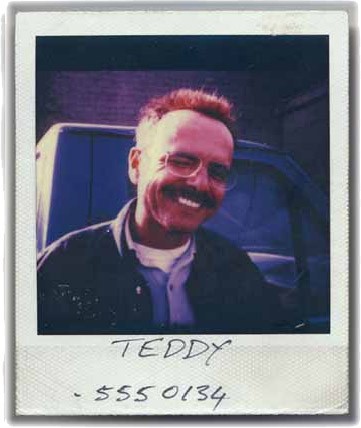
Memento
Memento
0:00/1:34

I first encountered Memento in 10th-grade AP Psychology, during a unit on amnesia. While most classmates gravitated toward louder, action-driven movies, Nolan’s fragmented, cerebral narrative quietly burrowed under my skin. The story—unspooled in backward-moving fragments—felt like a melancholic excavation of memory’s unreliability.
Where others found its puzzle frustrating, I was captivated by the slow, sorrow-tinged reveal: each shard inching further into the past, exposing how Teddy’s initially well-meaning loyalty becomes the trigger for his own death—an outcome Leonard never truly grasps with his condition. That bittersweet irony still echoes every time I revisit the film.
Years later, the pull remains. The closing credits roll over David Bowie’s “Something in the Air,” and it lands like a final, wistful sigh: a movie about forgetting that I, paradoxically, will never forget.
Introduction
Christopher Nolan’s Memento (2000) is famous for its unconventional storytelling: the film interweaves two narratives—one in black-and-white shown in normal chronological order, and one in color told in reverse chronological order. This jigsaw puzzle structure puts the viewer inside the disoriented mind of Leonard Shelby, a man suffering from anterograde amnesia (the inability to form new memories) after a violent trauma. Leonard’s last stable memory is the assault on his wife, and beyond that event he cannot retain any new information for more than a few minutes. To compensate, he lives by a strict system of notes, Polaroid photographs, and tattoos—external “mementos” he uses to remind himself of facts he would otherwise forget.
The film’s unique narrative technique—color scenes played backwards in time, alternating with chronological black-and-white scenes—is not just a gimmick; it is deliberately designed to mimic Leonard’s memory condition. As viewers, we are robbed of the usual sequential order of events, forcing us to piece together clues with no more knowledge than Leonard has in any given moment. This creates an experience akin to Leonard’s own: constantly unsure of context, we struggle to make sense of events that we, like Leonard, cannot fully remember. In the words of a neuroscientist analyzing the film, the “fragmented, almost mosaic quality to the sequence of scenes…cleverly reflects the ‘perpetual present’ nature of [Leonard’s] syndrome.” By the film’s end, the audience has essentially been living in Leonard’s shoes—a cinematic experiment in form that explores the relationship between memory, identity, and reality.
In this article, we will reconstruct the story of Memento in actual chronological order, from beginning to end, disentangling the two narrative threads and presenting Leonard Shelby’s story as one continuous timeline. Along the way we’ll provide detailed descriptions of each key scene, clarifying context, characters, and plot significance. We will also delve into the psychological and thematic elements at play—particularly the effects of Leonard’s anterograde amnesia on his perception, decision-making, and sense of self. Insights from psychology (memory research and cognitive science) and film theory will be incorporated to shed light on how Memento portrays memory’s quirks and what the film suggests about the connection between memory and identity. Whether or not you’ve seen the film, this breakdown will help you appreciate the intricate narrative while exploring the profound questions Memento raises about how we construct our reality.
Leonard Shelby’s Condition and the Film’s Puzzle Structure
Leonard Shelby (played by Guy Pearce) is an ex-insurance investigator who, as a result of a head injury during a home invasion, suffers from anterograde amnesia—a condition preventing him from forming new long-term memories. In practical terms, Leonard’s memory “resets” every few minutes. He remembers everything up to the night of the attack (his life history, marriage, etc.), but anything that happens after the injury slips away moments later, never consolidating in his brain. As one summary puts it, he has complete inability to recall recent events while memories from before the trauma remain intact. Leonard himself describes it colorfully: “I have no short-term memory. I know who I am and all about myself, I just…since my injury, I can’t make new memories.”
To cope with this perpetual-present existence, Leonard relies on an ingenious system of external memory aids. He carries a Polaroid camera to snap photos of people he meets and places he’ll need to remember. He scribbles notes on these Polaroids (for example, labeling someone “Don’t believe his lies” or reminding himself of a location) and on scraps of paper. Most dramatically, he tattoos critical facts directly onto his body, ensuring that the most important information is literally etched into his skin where he can’t misplace it. These tattoos include clues about the crime he’s investigating—the words “John G raped and murdered my wife” emblazoned across his chest, a description of the suspect, and other “facts” he discovers in his quest. By preserving key details in ink, Leonard creates a makeshift memory that he trusts more than his own mind: as he says, “Memory’s unreliable…they’re just an interpretation, not a record. They’re irrelevant if you have the facts.” In Leonard’s view, the facts (his notes and tattoos) are a more solid reality than his fleeting recollections.
Narrative structure
To convey Leonard’s disoriented experience, Nolan structured the film in a highly inventive way. The color sequences of Memento play in reverse order—we start at the end of the story and move backward in steps—while the black-and-white sequences play in forward (chronological) order, mostly consisting of Leonard’s inner monologue and investigations in between the action scenes. The two threads meet in the middle, forming a complete narrative loop. The effect is that the viewer is constantly thrown into Leonard’s frame of reference: in each color scene, we initially have no idea what has preceded it (just as Leonard wakes up again and again with no memory of what he was just doing). We, like Leonard, must act as detectives, using clues in the scene and Leonard’s note system to orient ourselves. The black-and-white scenes, presented as Leonard’s ongoing thoughts (often via a phone conversation in the film), gradually fill in background details in proper order, giving us objective context that Leonard himself is trying to understand.
This fractured timeline is more than a clever trick—it is thematically aligned with the film’s exploration of memory and truth. By scrambling the chronology, Memento forces us to experience the uncertainty and confusion that Leonard faces due to his amnesia. As one analyst noted, “robbed of the sequential progression of events…one’s understanding of reality becomes unsettled; an experience akin to that of people with anterograde amnesia.” The structure places the audience on equal footing with the protagonist, simulating the cognitive handicap moment-to-moment. Only at the very end, when the two timelines converge, do we (and Leonard) grasp the full picture of what has actually transpired. In essence, Nolan has crafted the film so that form mirrors content: the broken narrative mirrors Leonard’s broken memory. It’s a cinematic embodiment of the film’s central question: if you can’t remember the facts of your life, how do you know who you are or what really happened?
Before diving into the chronological reconstruction, keep in mind that Leonard is a classic unreliable narrator—not because he intends to lie, but because his memory condition means he himself can’t be sure of his own story. As we shall see, Leonard’s understanding of reality is flawed and subject to manipulation, both by others and by his own psyche. Nolan uses this to explore deeper psychological truths: how memories can be distorted, how our current motivations can shape what we “remember,” and how one might consciously or unconsciously rewrite personal history to cope with trauma. With that context established, let’s now piece together the actual sequence of events in Memento—the story in chronological order—and examine what it reveals about Leonard Shelby’s tragic quest for vengeance.
Chronological Story Breakdown
We will recount the events of Memento in the order they occurred in Leonard’s life (not the order they are shown in the film). This means starting before the film’s reverse narrative begins, covering the backstory of Leonard’s condition, then moving through each key event up to the film’s final moments (which, in the movie, are shown at the beginning). Along the way, we’ll integrate analysis of each scene’s significance and how it ties into the film’s psychological themes.
Before the Incident: Leonard’s Life and the Sammy Jankis Case
Prior to the trauma that changed his life, Leonard Shelby was an ordinary man with a steady job and a wife he loved. He worked as an insurance claims investigator—a detail that becomes important both for plot and theme. Leonard was methodical, analytical, and experienced in evaluating claims of injury. In fact, one of his past cases involved a man named Sammy Jankis, whose story Leonard frequently recalls (in the film, Leonard often tells people “Remember Sammy Jankis”—it’s even tattooed on his hand as a permanent reminder).
According to Leonard’s memory, Sammy Jankis was a client he encountered who had suffered anterograde amnesia after an accident—the same condition Leonard would later develop. Sammy could not form new memories, just like Leonard. Leonard investigated Sammy’s insurance claim by observing whether Sammy truly had memory impairment or was faking it. Sammy’s wife, a diabetic, was desperate and puzzled by her husband’s inability to remember things, so she devised a heart-wrenching test: since she required regular insulin shots (which Sammy would administer), she repeatedly asked Sammy for her injection, multiple times in a short period, to see if he would remember having just given her one. Tragically, Sammy did not remember; he kept giving her additional insulin shots, ultimately causing his wife to die of an overdose . Leonard’s assessment was that Sammy’s condition was real (thus denying the insurance claim wasn’t an act of fraud), but this outcome was devastating—Sammy ended up in a nursing home, trapped in eternal present, and his wife lost her life in trying to grasp the reality of his illness.
Leonard recounts the tale of Sammy Jankis repeatedly, almost obsessively, using it as a cautionary example of his own situation. It serves a dual purpose: exposition and foreshadowing. On one level, Sammy’s story provides a concrete explanation to others (and the audience) of how anterograde amnesia works—illustrating the inability to learn or remember new things, and the profound consequences that can have. Through Sammy, we learn about the role of the hippocampus in memory (Leonard notes Sammy’s tests showed damage there) and see a vivid example of memory’s failure (the repeated injections). On another level, the story of Sammy plants a seed of doubt: it parallels Leonard’s own condition so closely that we later question why Leonard fixates on it. Indeed, as the film progresses, we come to suspect that Sammy’s story might be more than just a parable Leonard tells…it might be intimately connected to Leonard’s own reality (a point we will return to).
For now, in the chronological timeline, Leonard is not yet aware of any irony—Sammy was just a case he dealt with. Leonard was, at this point, a man with a normal life and memory, going home each day to his wife, Catherine. Little did he know that the knowledge he gained from Sammy’s case would soon become personally relevant in the most horrific way.
The Home Invasion: Trauma that Shatters Memory
The turning point of Leonard’s life—the incident that Memento revolves around—is a home invasion and assault that occurs late one night. Leonard is at home with his wife. The film (in Leonard’s flashbacks) gives us only fragments of this event, which Leonard himself remembers only in disjointed snapshots: the sound of his wife’s voice, the bathroom floor tiles, a struggle. Here is what we (and Leonard) understand happened:
One night, Leonard’s wife was attacked in their home by two intruders. Leonard intervened upon hearing his wife’s screams from the bathroom. He manages to shoot and kill one of the attackers (this is implied by his memory of a gunshot and an assailant being downed—Leonard recalls “I remember the guy… I was on him, I slammed his head against the mirror”, etc.). However, the second assailant subdues Leonard by smashing his head violently against a wall or mirror. Leonard collapses, gravely injured, as the second attacker flees. In the aftermath, Leonard reaches his wife. She has been badly hurt—the film suggests she was raped and possibly strangled. Leonard’s last clear memory is of holding his wife, her bleeding body limp, as he loses consciousness. He believes he saw her die in that moment.
This brutal attack is the origin of Leonard’s brain damage. The blow to his head caused trauma to his brain (likely damaging the hippocampus and related structures critical for memory formation). When Leonard regains consciousness, he is physically alive but discovers he now has anterograde amnesia: he cannot retain new memories beyond a few minutes. The police investigate the incident, and Leonard tells them there were two attackers – but apparently the authorities find only the one dead intruder and assume Leonard was mistaken or that the second man “never existed.” Leonard is adamant that a second perpetrator—the one who “got away”—was real. This man becomes the focus of his life. In Leonard’s mind, this unidentified assailant is “John G.,” the man who “raped and murdered my wife” (as he will later tattoo on himself as an undying reminder).
For Leonard, everything that matters freezes at this point in time. His wife was (as he believes) killed that night, and he himself woke up in a hellish new reality: he has no ability to make new memories. Imagine coming out of a trauma and, from that moment on, nothing sticks in your mind—every day (every few minutes, in fact) you are blinking into a world that feels unfamiliar, having to reorient yourself from scratch. Leonard experiences exactly that. A Harvard neurologist commenting on Memento notes that Leonard’s condition is portrayed far more realistically than typical Hollywood amnesia tales: Leonard retains his identity and long-term past, and the film shows the severe everyday memory difficulties of the disorder. For instance, Leonard must repeatedly introduce himself to people and can’t remember conversations he had an hour ago. His life becomes a continuous loop of forgetting. One scholar at a panel on Memento put it succinctly: “Images of this brutal act are Leonard’s last enduring memory”, and everything after is perpetually lost, forcing Leonard to live moment-to-moment .
Psychological impact: The home invasion not only sets up the plot (Leonard’s motive for revenge) but also establishes the central psychological tragedy. Leonard is a trauma survivor who cannot heal in a normal way because he is literally unable to move forward—his mind remains stuck in the moment of violence. He awakens each day (or even each few minutes) with the fresh pain of his wife’s death, because for him no time has passed since the incident. In a sense, Leonard’s life becomes an eternal replay of grief and anger without resolution. This goes beyond memory loss; it’s a state of profound psychological limbo. As we continue through the chronology, we will see how Leonard desperately tries to impose order and purpose on this limbo by hunting down his wife’s “killer.” Ironically, his condition means that even if he succeeds, he might never know it.
Before setting out on that quest, Leonard did what he could to prepare himself. In the aftermath of the attack, once he understood his condition, Leonard began writing notes and making tattoos of the facts he knew about the crime. The most important details—those he never wants to forget—he tattoos on his body in black lettering. The rest, he keeps in handwritten notes and Polaroids. This process effectively externalizes his memory: since his brain can’t store new information, he stores it in the world around him. Leonard’s chest soon bears the bold inscription: “John G. raped and murdered my wife”—the fundamental truth that drives him. He also tattoos descriptors of the culprit (“White male, mid 30s, 6’2’’, etc.”), and instructions like “Find him and kill him.” Each tattoo is a piece of the puzzle he is determined to solve. Leonard has become, by necessity, single-minded: his raison d’être is to find “John G.” and avenge his wife. As Leonard himself bitterly states, the attacker “took away my f*ing memory—he destroyed my ability to live,” so Leonard now lives “only for revenge.”
Starting the Hunt: Clues, Tattoos, and the First Kill
With the police dismissive about a second attacker, Leonard realizes that traditional justice may not be served. Despite (or rather, because of) his amnesia, he is determined to investigate and punish the man who got away. This kicks off Leonard’s personal manhunt. He uses the tools at his disposal—his notes, photos, and tattoos—to orient himself each time he “wakes up” to his mission. A typical cycle for Leonard is: he comes to, not knowing where he is, then checks his tattoos to remind himself he’s looking for “John G.,” looks at Polaroids to see whom he’s met or what car he’s driving, etc., and then proceeds from whatever clues he’s left himself.
Early on in his investigation, Leonard crosses paths with a man who claims to be helping: Teddy. Teddy (played by Joe Pantoliano) is an affable, fast-talking fellow who finds Leonard not long after the incident. Teddy’s real name, we later learn, is John Edward Gammell—notably, a “John G.” himself. Teddy presents himself as a police officer (or ex-cop) who has empathy for Leonard’s situation. In truth, Teddy was an undercover officer involved in Leonard’s case. According to Teddy’s own words, he believed Leonard’s story about a second attacker and felt sorry for him. With official investigation going nowhere, Teddy decided to help Leonard track down the elusive culprit off the record.
Together, using whatever evidence Leonard had from the scene and Teddy’s police resources, they hunt for a man fitting Leonard’s clues: someone named John (or James) with last initial G, matching the physical description, who might have been involved in the break-in. In the Memento narrative, this part of the story is not shown directly; we only learn about it later through dialogue. But chronologically, this is a critical event: Leonard actually finds and kills the “real” attacker—his wife’s assailant—with Teddy’s help, perhaps a few months after the incident. Teddy claims (later in the film) that he set up the situation and even took a photograph of Leonard immediately after he killed the man, hoping it would give Leonard closure. Indeed, Leonard is smiling in that photo—ecstatic, bloody, triumphant—having supposedly gotten his revenge.
But the victory is short-lived: due to his condition, Leonard cannot retain the memory of it. Within minutes, he has no recollection that he’s caught and killed his wife’s attacker. His tattoos at that point did not yet say “I did it” (though Teddy insists he should now get such a tattoo). Instead, Leonard’s mind, blank again, only knows the perpetual mission: find and kill John G. In essence, Leonard has achieved his goal without feeling any satisfaction, because the achievement disappeared from his mind almost as soon as it happened. This sets up the darkly ironic cycle at the heart of Memento: Leonard already got his man, but he will never know it—so his quest must continue. Teddy, realizing this, faces a dilemma. He could try to convince Leonard that it’s over, but Leonard’s condition makes that nearly impossible to stick. As Teddy later remarks to Leonard, “You won’t remember! You won’t remember that you’ve already avenged your wife” .
Teddy’s solution is ethically dubious: he decides to use Leonard’s drive for vengeance for his own ends. Since Leonard insists on searching for “John G.” and there are, inconveniently, countless men named John G out there, Teddy starts guiding Leonard toward other targets who fit the bill, essentially stringing him along. In Teddy’s view, this gives Leonard a purpose (“Since the memory didn’t stick and Leonard could never truly sate his desire for revenge, Teddy used Lenny to eliminate other villains with similar names”)—and at times it benefits Teddy as well, as we shall see. Teddy admits there’s a kind of cruel mercy in this: Leonard is happy each time he kills a man he believes is his wife’s killer, even if that belief is false and fleeting. “There are plenty of John Gs out there,” Teddy notes wryly, including, incidentally, Teddy himself.
One such target that Teddy lines up for Leonard is a man named Jimmy Grantz, who happens to be involved in drug dealing. Jimmy’s full name is James G., conveniently matching the “John G.” pattern. Teddy sets up a scenario where Leonard will confront Jimmy, thinking Jimmy is the attacker he seeks. This brings us to the events that directly precede the movie’s main timeline: Leonard kills Jimmy Grantz at an abandoned warehouse on Teddy’s cue. In the chronological sequence, this is effectively “John G. victim #2” (after the real killer from a year ago). Leonard strangles Jimmy and takes a Polaroid photo of the body as per his routine. However, just after this killing, things start to unravel: when Jimmy’s dying words are “Sammy… Sammy,” Leonard is briefly puzzled (how does this stranger know the name Sammy?), and then Teddy arrives on the scene earlier than expected, interrupting Leonard’s script.
At this point, Teddy drops a bombshell of truth on Leonard (we’ll explore this fully in a later section): he reveals that Jimmy wasn’t the original killer at all, and that Leonard has been essentially duped into being a vigilante assassin. For Teddy, Jimmy was a means to an end – not only a way to give Leonard a new “John G.” to chase, but also a chance for Teddy to steal Jimmy’s money (the $200,000 from a drug deal Jimmy thought he was making with Teddy). Leonard, of course, does not remember the earlier “real” revenge or Teddy’s previous manipulations. All he knows in that moment is that something is terribly off – and Teddy seems to be betraying him with wild claims. This confrontation between Leonard and Teddy at the warehouse is pivotal, but let’s hold that thought – we’ll revisit exactly what Teddy tells Leonard as part of the revelations in a subsequent section (“Piecing Together the Truth”). For now, we’ll step back to what Leonard does immediately after killing Jimmy, before those revelations sink in, because it leads him to the next key character in our story: Natalie.
Entering the Web of Lies: Meeting Natalie
Leonard (Guy Pearce) meets Natalie (Carrie-Anne Moss) in a diner. Natalie soon realizes Leonard’s memory condition is real and sees how she might use it to her advantage.
After the altercation with Jimmy, Leonard is left disoriented. He’s standing over a dead man (Jimmy) in an abandoned building, and moments later he will forget exactly why. As he stumbles out, Teddy is attempting to explain things to him, but Leonard’s trust in Teddy is broken (in fact, Leonard grows to suspect Teddy might be his real enemy). Leonard drives off in Jimmy’s car, wearing Jimmy’s clothes—essentially leaving the scene in the victim’s belongings. Importantly, Jimmy’s car has a license plate number that Leonard notes (more on this later). At this stage, Leonard doesn’t recall killing Jimmy or what Teddy revealed; he just knows from his “facts” that he’s looking for John G, and now he has a new clue: Teddy’s behavior has made Leonard deeply suspicious of him.
Leonard soon ends up at a local bar, seeking information. This bar is where Jimmy’s girlfriend, Natalie (Carrie-Anne Moss), works. When Leonard walks in, Natalie immediately notices two strange things: he’s driving her boyfriend Jimmy’s Jaguar and wearing what look like Jimmy’s clothes. Natalie has been worried about Jimmy, who went to meet someone for a drug deal and never came home. Now here’s a stranger with his car and clothing. She doesn’t show her alarm openly. Instead, Natalie serves Leonard and starts probing. Leonard, meanwhile, has no idea who Natalie is—she’s just a new face to him—but he notices she seems to recognize the car or clothing.
To test her hunch and also to size Leonard up, Natalie performs a cruel little experiment (this happens in the bar scene in the film): She takes a beer bottle that the bar’s patrons have been spitting into (essentially a disgustingly contaminated drink) and offers it to Leonard as if it’s fresh. Moments before, Leonard saw the bottle being used to collect people’s saliva – any person with short-term memory would know not to drink from it. However, Leonard’s memory resets in the interim. By the time Natalie hands him the bottle, he has forgotten the entire context – and he takes a sip unwittingly. Natalie now confirms what she suspected: Leonard’s memory impairment is very real, and very severe . He can’t even remember something that happened 2 minutes ago. This confirms to Natalie that Leonard truly has the condition he claims (anterograde amnesia) and isn’t some con man. It also shows her that Leonard is highly vulnerable – he can be easily tricked because he won’t recall the truth of a situation.
Natalie is a sharp, resourceful woman, and at this point her motives are her own. She pretends to be sympathetic to Leonard’s quest. Leonard likely shows her his tattoos, explaining that he’s hunting for “John G.” (It’s possible Leonard even believes Jimmy—Natalie’s missing boyfriend—was John G, because Jimmy’s driver’s license name is James G., but Leonard’s forgotten killing him. So he may inquire with Natalie about “Jimmy G.” without realizing he’s the one who just killed him.) Natalie quickly pieces together bits of the puzzle: her boyfriend Jimmy was involved with some dangerous deal (likely with this mysterious Teddy person), and now Jimmy’s gone and Leonard is here in his place, with an actual memory condition that makes him suggestible. Natalie sees an opportunity.
At first, Natalie offers to help Leonard. She claims she can assist him in finding the “John G.” he’s after. She invites Leonard to her home under the pretense of being a friend. Why would she do this? Because Natalie has her own agenda. With Jimmy missing (and likely dead, though she doesn’t know the details), Natalie is left with a problem: a man named Dodd is aggressively looking for Jimmy and the money from their drug deals. Dodd is Jimmy’s associate in the drug trade, and if Jimmy disappeared with $200,000, Dodd suspects Natalie might have it or know where it is. In Jimmy’s absence, Dodd has started harassing Natalie—possibly threatening her life—to get the money. Natalie now realizes she might use Leonard as a weapon against Dodd.
At her house, Natalie learns more about Leonard’s condition and methods. Leonard probably tells her about Sammy Jankis (he often uses that story to explain his condition’s nature). Natalie is genuinely one of the first people Leonard has met after the trauma (aside from Teddy) who interacts with him for an extended period, so he somewhat trusts her, having no evidence to the contrary (and he writes down anything important to remember—for instance, he makes a note or a Polaroid caption that “Natalie will help me” to remind himself later). Natalie in turn feigns concern for Leonard. She sees how driven he is by the notes and tattoos—in a sense, Leonard is very predictable: if you control the information he has when his memory resets, you can control Leonard’s actions. This is exactly what Natalie proceeds to do.
Natalie’s Manipulation and Leonard’s Vulnerability
Natalie’s plan to deal with Dodd using Leonard has one major hurdle: Leonard is not a hitman or thug by nature. He’s focused only on finding his wife’s killer. Getting him to take on Dodd (a random target from Leonard’s perspective) requires convincing him that Dodd is somehow connected to his mission or a threat that needs elimination. Leonard, despite his condition, isn’t an entirely blank slate—he has instincts and can be uncooperative if something doesn’t align with his “facts.” At first, when Natalie suggests helping her with this dangerous guy named Dodd, Leonard is reluctant. Why should he attack someone unrelated to “John G.”? He might refuse because it’s not part of his quest.
Natalie, demonstrating a rather mercenary side, decides to strong-arm Leonard’s emotions. In a startling scene, she exploits Leonard’s inability to retain short-term events to manipulate him into a rage. She removes every pen or pencil from his reach (so he can’t jot down what’s about to happen), and then launches a vicious verbal attack on Leonard—insulting his manhood, belittling his memory condition, and even cruelly targeting the painful memory of his wife. She says horribly triggering things about his deceased wife (knowing Leonard will react). Leonard, already under stress, is provoked beyond reason. In a burst of anger, he strikes Natalie, punching her in the face. Natalie then quickly leaves the house, slamming the door.
Leonard tries his best to remember what just happened, but within a minute or two, Leonard’s memory resets with no written notes to rely on. He literally forgets the entire altercation. When Natalie returns a few minutes later, Leonard is shocked to see she’s bruised and distraught. “What happened?” he asks, concerned. Natalie, holding her swollen lip, lies smoothly: Dodd showed up and beat her, angry and looking for the money. She claims she barely escaped and that Dodd could come back to hurt or kill her.
Leonard, hearing this, is immediately incensed on Natalie’s behalf. Now, in his mind, Dodd is a violent threat—not only possibly connected to “John G” (since Dodd was Jimmy’s associate, and Jimmy’s name rings a bell to Leonard as one of his clues), but also someone who has attacked an innocent woman who is helping him. Leonard’s protective instincts and sense of justice kick in. In essence, Natalie has successfully redirected Leonard’s fury toward Dodd. Leonard now has the motivation Natalie wanted him to have: he believes Dodd must be dealt with. He even writes a note to himself about it, like “Dodd hurt Natalie. Get Dodd.” The brilliance (and cruelty) of Natalie’s ploy is that Leonard has no idea he himself caused Natalie’s injuries. She literally uses Leonard as the weapon and fuel for her revenge on Dodd. This moment powerfully illustrates just how exploitable Leonard’s condition makes him. Because he can’t trust his own recent memory, he has to trust whatever narrative someone else gives him (if it fits the facts he does have). Natalie, appearing sincere and victimized, becomes an author of Leonard’s reality in this scene.
For Leonard, this is also a frightening example (if only he could remember it) of how his perception of reality can be completely warped. Within a span of 5 minutes, Natalie went from friend to foe and back to friend in his mind, and he is none the wiser. It underscores the film’s recurring question: if your memory resets, how do you know what just happened? As cognitive experts in a Harvard panel discussing Memento pointed out, “memories are an interpretation, not a record”, and Leonard’s case shows how easily the interpretation can be manipulated when the record is gone .
Now firmly convinced that helping Natalie with Dodd is part of his mission, Leonard prepares to confront Dodd.
Confronting Dodd: Short-Term Action, Long-Term Confusion
Leonard uses the information Natalie provides (Dodd’s full name, maybe an address or the motel where Dodd is staying) to hunt down this new target. In Leonard’s mind, Dodd is now just another objective, akin to finding “John G.” He believes Dodd attacked Natalie and possibly is tangentially related to the John G case (since Dodd is connected to Jimmy G.). Leonard’s skills as an investigator and a man on a mission come to the forefront here: even without short-term memory, he can execute a plan if he’s focused on it in the moment.
Leonard tracks Dodd to a motel. In a tense sequence, Leonard surprises Dodd in his room. (The film shows Leonard sneaking into the bathroom and waiting—an example of him formulating a quick plan while he’s “in the zone,” before his memory resets.) Dodd enters, and Leonard ambushes him. A scuffle ensues, where Leonard manages to get the upper hand despite Dodd being a physically imposing, aggressive man. Leonard is driven by a burst of purpose and anger (fueled by the belief that Dodd hurt Natalie), which gives him an edge. He beats Dodd and subdues him by striking him with a bottle, tying him to a chair and even gagging him.
However, once Dodd is restrained and no immediate stimuli are keeping Leonard’s memory active, Leonard faces a problem: he forgets why he’s there and who this man is. In a darkly comic but poignant moment, Leonard, having tied up Dodd, steps out of the room. When he re-enters, his memory has “refreshed,” and he sees a bound, beaten man in the closet. Leonard demands, “Who did this to you?” to the gagged Dodd. Dodd, bewildered and angry, responds, “You did.” Leonard quickly realizes that must be true—he alone has the strength and situation to have captured Dodd—but he has zero recollection of it. It’s an eerie situation: Leonard is standing over a violent criminal he himself captured, but he’s experiencing it as though it just magically happened. This is another illustration of the “perpetual present” of Leonard’s life. He can win fights, commit acts, but immediately become a stranger to his own actions.
Not sure what to do next, Leonard turns to the one person who has been a guide for him: Teddy. He finds Teddy’s contact or perhaps Teddy shows up of his own accord (Teddy tends to hover around Leonard, we suspect, to keep using him or to steer him away from trouble). Leonard is initially wary of Teddy—by now one of Leonard’s notes to himself includes “Don’t believe his lies” scrawled under Teddy’s Polaroid picture. (We will soon see how that note came to be, but at this point chronologically, Leonard has indeed grown suspicious of Teddy. The note likely was added after Teddy’s outburst of truth at the warehouse with Jimmy.) Despite his mistrust, Leonard doesn’t know who else to call for handling a tied-up thug, and some instinct tells him Teddy has been an ally in cleaning up messes.
Teddy arrives at the motel room where Leonard is holding Dodd. Teddy is surprised but also concerned: this is a complication he didn’t anticipate. Leonard has an unconscious man in the closet and is asking for help. Teddy, ever the pragmatist, helps Leonard deal with Dodd without involving the police (which neither of them want, given the other crimes afoot). They intimidate Dodd at gunpoint and march him out. Leonard, following Teddy’s suggestion, drives Dodd to the outskirts of town. They threaten Dodd and warn him to never bother Natalie (or anyone) around here again. Effectively, they run Dodd out of town rather than killing him. Dodd, terrified and confused by this duo (Leonard’s ferocity and Teddy’s authority), agrees and flees for his life.
After this, Dodd is no longer a factor—Natalie’s problem is solved. She now has confirmation that Jimmy truly isn’t coming back (since Dodd was desperate for the money, Jimmy must be gone), and Dodd himself won’t trouble her again. Natalie’s goal in using Leonard is achieved.
For Leonard, the episode with Dodd is illuminating in ways he can’t fully process: it shows that he is capable of handling dangerous situations using only his wits and notes. But it also underscores how dependent he is on others to fill gaps in his memory. If Teddy hadn’t shown up, what would Leonard have done with Dodd once he forgot why he had him? It’s a frightening thought. Leonard’s ability to navigate the world is tenuous and requires either constant note-taking or trust in a helper. In Dodd’s case, Teddy became that helper (though Leonard is starting to doubt Teddy’s intentions).
With Dodd taken care of, Leonard returns to Natalie to report success (and perhaps to get more information on his quest). Natalie now has every reason to keep Leonard on her good side—he solved her Dodd problem effectively. In gratitude (and with her own agenda still), Natalie agrees to help Leonard in his pursuit of John G. This is where Natalie provides a very crucial assist: Leonard mentions a license plate number that he believes is linked to his wife’s killer. In fact, Leonard had written down the plate number “SG13 7IU” after the Jimmy incident, when he briefly decided to turn against Teddy. Leonard doesn’t remember why he has that number—only that it’s a key piece of info in finding “John G.” So he asks Natalie to use her resources to run a trace on the license plate. Natalie, who has connections at the DMV, says she can do this. She checks the number and discovers it’s registered to one John Edward Gammell—Teddy’s full name. In other words, the plate belongs to Teddy. She likely also finds Teddy’s file, confirming he’s an undercover cop named John G.
Natalie hands Leonard this information, not knowing exactly what it will trigger. From her perspective, she’s just helping Leonard as promised. But for Leonard, this is a game-changer: he now has official confirmation that Teddy is “John G.”. Leonard’s notes already warned “Don’t believe his lies” (which he himself wrote earlier in anger). Now with the DMV info, Leonard connects the dots: Teddy has been deceiving him all along, and Teddy’s name is John G. This can only mean one thing in Leonard’s mind—Teddy is the man responsible for his wife’s death. Whether or not that’s true, Leonard chooses to believe it. It fits the narrative he currently accepts: Teddy manipulated him, Teddy’s been around since the beginning, Teddy’s a “John G.” and thus a perfect target for his vengeance.
From the chronological perspective, Leonard is about to become both judge and executioner for a crime that was, ironically, already resolved. We have reached the juncture where Leonard’s psychological need for a target converges with the final pieces of his evidence. Everything is pointing him toward Teddy. What comes next is the climax of Leonard’s story and the crux of Memento’s commentary on memory and self-deception.
Piecing Together the Truth: Revelations at the Abandoned Warehouse
Leonard’s Polaroid with the inscription “Don’t believe his lies.” This note to himself about Teddy is Leonard’s way of ensuring he doesn’t later trust Teddy’s words. It symbolizes Leonard’s deliberate choice to manipulate his own memory, setting up Teddy as his final target.
Armed with the license plate clue identifying Teddy as “John Gammell,” Leonard sets up a final confrontation. To fully understand Leonard’s state of mind and the thematic significance of this moment, we need to examine the revelations Teddy gave Leonard just prior (chronologically) at the abandoned warehouse where Jimmy Grantz was killed. This is where Memento’s two narrative threads meet and the truth (or a version of it) is laid bare.
After Leonard killed Jimmy (thinking he was avenging his wife), Teddy showed up to retrieve the drug money and couldn’t resist telling Leonard what was really going on. Teddy reveals several crucial facts:
Leonard already got his revenge long ago. Teddy was the officer on his case, and a year prior he and Leonard tracked down the real attacker (another “John G.”) and Leonard killed him . But Leonard, unable to store that memory, didn’t feel closure. Teddy says he felt sorry for Leonard and saw that Leonard “could never remember to be satisfied.”
Since then, Teddy admits he has been using Leonard’s condition to direct him toward other targets who happen to be criminals (and coincidentally named John G.) so that Leonard can continue to feel a sense of purpose. Teddy half-defends this by saying those were “bad guys” who deserved it, and that it was the only way to give Leonard something to live for.
Teddy also confesses that this latest target, Jimmy, was not involved in Leonard’s wife’s death at all. Teddy set up Jimmy because Jimmy had a lot of cash from a drug deal—Teddy wanted the money, and Leonard’s urge to find a John G. made him the perfect unwitting hitman. In Teddy’s words, “Teddy and Leonard’s most recent John G was Jimmy, the drug dealer boyfriend of Natalie.” Leonard is horrified to realize he’s been tricked into murdering an innocent man (innocent with respect to his wife, at least).
Perhaps the most jarring reveal is about Sammy Jankis. Teddy tells Leonard that Sammy’s story, as Leonard knows it, isn’t entirely true. Sammy didn’t have a wife, says Teddy, and Sammy was a con man who faked his condition. The real diabetic wife who overdosed on insulin was Leonard’s own wife. In other words, Teddy implies that Leonard’s wife survived the initial attack and later died because Leonard, with his memory impairment, kept giving her insulin shots—a tragic echo of the Sammy story. According to Teddy, Leonard has repressed this real memory out of guilt and projected it onto Sammy Jankis as a coping mechanism. “You’re living a lie,” Teddy essentially tells Leonard—“your wife wasn’t murdered by a stranger; you accidentally killed her yourself.”
These revelations hit Leonard hard. If Teddy is telling the truth, it means Leonard’s entire crusade is built on a mix of half-truths and self-deception. The man he thought he was avenging is already avenged (and his wife’s true fate might have been unrelated to that attacker), and worse, Leonard might be the reason his wife is no longer alive. The psychological weight of this is unbearable for Leonard. In an earlier moment of the film, Leonard prophetically said: “When we’re remembering, we’re remembering ourselves the way we want to be, not the way we were”—highlighting that memory can serve our needs and desires. Now faced with an ugly reality, Leonard experiences exactly that: he has a choice to make about what he wants to remember going forward.
Leonard’s reaction is a mix of denial, anger, and self-preservation. He cannot form new long-term memories, but he can make decisions in the moment that affect his future behavior by encoding them in his notes. And that’s what he does. In a moment of dark clarity, Leonard decides that even if Teddy’s telling the truth, he doesn’t want to live with that truth. He needs a reason to exist—a purpose—and if he accepts that he’s already killed the culprit and that he himself inadvertently harmed his wife, then his purpose and self-image are gone. Leonard says to himself, “Do I lie to myself to be happy? In your case, Teddy… yes I will.” He consciously chooses to create a new reality: he will make Teddy his new “John G.” target. This is the keystone of Memento’s psychological theme: Leonard literally conditions himself with false evidence to pursue a self-justifying narrative. It’s a shocking act of intentional self-deception.
So, Leonard writes down the license plate number of Teddy’s car (which he noticed at the scene) as if it were a fact he had discovered about “John G.” He also grabs a pen and scribbles on Teddy’s Polaroid picture the now-infamous warning: “Don’t believe his lies.” This way, the next time Leonard comes across Teddy and reads his own note, he will immediately distrust anything Teddy says, cementing Teddy’s role as the villain in Leonard’s mind. Leonard is essentially setting up future Leonard to kill Teddy, by ensuring that all his “evidence” points to Teddy as the perpetrator. He even burns the photograph of himself celebrating the original revenge killing (the photo that would prove he already succeeded). By destroying that evidence, Leonard ensures he won’t stumble upon a reminder that his quest is over. This extreme step highlights how memory (or its absence) lets Leonard manipulate his own sense of truth: he literally chooses the “facts” that will define his reality and erases the ones that conflict with his desired narrative.
Memory scholars note that this reflects a real aspect of how memory and identity work: we often reshape our recollections to fit our current emotions and needs . Leonard’s case is just an extreme, conscious example of it. Daniel Schacter, a psychology professor, has described this kind of phenomenon as a “retrospective bias”—we use memory to reinforce what we want to believe in the present . Leonard wants to believe his wife’s death can still be avenged and that he’s a hero, not a murderer, so he molds his memory system (notes/tattoos) to support that.
Now, back in chronological progression: Leonard leaves the warehouse after formulating this plan. He does not remember actually resolving to frame Teddy (because even that intention will vanish), but he has put the plan into motion via his written clues. As he drives away in Jimmy’s car, Leonard likely feels a sense of grim resolution. He may not recall Teddy’s entire speech anymore, but he has his new target: the man with the license plate SG13 7IU. By the time he meets up with Natalie and she provides the DMV info confirming the plate belongs to John Gammell (Teddy), it only reinforces what Leonard has already decided at some unconscious level—Teddy is the one. Leonard also perhaps gets a tattoo of the license plate on his thigh (in the film we see him at a tattoo parlor at some point adding a number, which corresponds to this clue).
Thus, by the end of this phase, Leonard’s “investigation” has been deliberately skewed to point to Teddy. The tragic irony is that Leonard is now fully committed to a path of vengeance that has nothing to do with what actually happened to his wife. He is about to murder the one person who (despite deceitfully) actually helped him avenge her. This is why Memento is often cited as a powerful exploration of self-deception: Leonard has sacrificed truth for the sake of a meaningful narrative in his life.
Psychologically, Leonard’s choice can be seen as an extreme example of how trauma victims might cope by creating a story that gives them purpose rather than facing guilt or emptiness. He cannot heal or move on, so he transforms his life into a continuous myth of justice. In doing so, he loses any chance at objective reality—he becomes both creator and prisoner of his own false memory system.
With the stage set, Leonard proceeds to the final act: the execution of Teddy.
Final Retribution: Leonard’s Last Stand
Leonard eventually contacts Teddy under the pretense of meeting up, or Teddy finds Leonard (since Teddy is still trying to stick close, unaware that Leonard has turned on him). They agree to meet at the very place where this cycle began—the abandoned warehouse (an old building on the outskirts of town). Teddy is likely under the impression that Leonard has perhaps remembered something or found a new lead and needs his help. Teddy arrives, probably unguarded and friendly: “Hey Lenny, what’s up?” But Leonard’s conditioning has kicked in fully. The moment Leonard sees Teddy, he checks Teddy’s photo and his tattoos and notes—all telling him that this man is his ultimate target. “John G.—kill him” is literally what Leonard’s tattooed quest demands, and here is Teddy, a John G., and now marked as untrustworthy by Leonard’s own hand.
The scene is tense and tragic. Teddy notices something is off as Leonard levels a gun at him. He tries desperately to talk Leonard down, insisting Leonard is mistaken. “Lenny, what’re you doing? We’ve been through this! You already got the guy!” Teddy pleads, even revealing his full name “John Edward Gammell” and reminding Leonard that he is a cop who was trying to help . But Leonard’s note to self—“Don’t believe his lies”—has primed him to ignore anything Teddy says. In Leonard’s mind, Teddy’s protests are just the villain trying to save his own skin with deception.
A key aspect here is that Leonard is utterly convinced he’s doing the right thing. He’s constructed his reality such that Teddy is the man who “has to pay.” All of Leonard’s righteous fury, grief, and frustration focus on Teddy. Teddy, realizing the danger, confesses and argues in circles: Yes, my name is John G., but I didn’t kill your wife! I told you what happened! He goes so far as to admonish Leonard: “You won’t even remember why you’re doing this!”—trying to make Leonard see the futility. But Leonard has steeled himself against compassion or doubt. In his perspective, even if Teddy might have helped him in the past, Teddy also admitted to using him and lying. Leonard’s trust is irreparably broken, and his need for vengeance has a target.
In the film’s opening (which is this scene played in reverse), Leonard shoots Teddy in the head. Chronologically, that is the final act: Leonard kills Teddy. Teddy’s last words are lost on Leonard’s failing short-term memory even as they’re uttered. A gunshot echoes. Teddy’s body falls to the floor. Leonard takes a Polaroid photo of Teddy’s corpse—his instinctual behavior to document his “success.” The cycle, Leonard believes, is finally complete. He has found the man who truly “murdered” his wife (in his current understanding) and exacted justice.
Of course, within minutes, Leonard will forget the details leading up to this killing. The Polaroid photo of Teddy’s dead body will develop in his hand, and as Memento cleverly showed in its opening shot, Leonard’s condition might even lead him to forget he took the photo, interpreting the image in bizarre ways. (In the film’s reverse opening, we see the developed Polaroid image fade to blank—symbolizing how even concrete evidence fades from Leonard’s mind.) Leonard now might only recall that he “felt” vindicated but not exactly why, or even that Teddy was the target. If his system of notes doesn’t immediately remind him “you killed your wife’s killer,” he could end up as lost as ever.
And indeed, the film implies a darkly endless loop: Having killed Teddy, Leonard’s last anchor to the truth is gone. He might soon again question why he was there or who Teddy was. Perhaps he’ll find the note about the license plate and not remember writing it, leaving him in confusion. Perhaps he might encounter Natalie again and ask for help, or someone new might manipulate him. The ending suggests Leonard could wander into the world, continuing to search for “John G.” indefinitely, or until he’s caught (Teddy was a cop, after all, and now he’s a murder victim).
Significance of the conclusion: In chronological terms, Leonard Shelby has become what Teddy accused him of being: a killer who will never stop because he’ll never remember. He has, tragically, killed at least two men (the real attacker and Teddy) who did not actually pose a threat at the time he killed them, plus a third (Jimmy) who was totally unrelated to his wife’s death. Leonard is, unbeknownst to himself, a serial murderer—albeit one driven by the illusion of righteous payback. The final act of killing Teddy is the culmination of Leonard’s self-fulfilling prophecy: he created an enemy (Teddy) to satisfy his need for revenge and then eliminated that enemy.
Thematically, this ending hammers home the film’s exploration of memory and morality. Leonard’s inability to remember means he also evades the moral consequences of his actions. Each time he does something monstrous, he soon forgets it, allowing him to continue seeing himself as the hero. In a sense, his condition provides the ultimate loophole for guilt. But the audience, seeing the full chronology, recognizes the deep tragedy: Leonard’s quest was futile and based on a lie he told himself. He is both victim and perpetrator, caught in a loop of his own making.
From a psychological viewpoint, Leonard’s case forces us to ask: If you can’t remember your own deeds, are you responsible for them? Leonard will wake from this event not knowing he killed Teddy, so how can he feel remorse? The film doesn’t answer this directly, but it puts us in an uncomfortable position of judging a man who is sincerely doing what he believes is right, even as he does terrible things under that belief. It’s a dramatic illustration of how our reality is constructed by our minds. Leonard destroyed the reality where he was a man who had justice and instead chose the reality where he is always in pursuit of it. As one neuroscience commentator noted, Memento confronts us with “the question of how much of Leonard’s memory of the past is real and how much constructed from beliefs and wishes.” In the end, Leonard chooses belief over fact—and pays a heavy price, losing his humanity in the process.
Memory, Identity, and Self-Deception: Themes in Memento
Having reconstructed the chronological story of Memento, we can now step back and consider what this tale signifies on a larger level. Leonard Shelby’s journey is a profound meditation on memory and identity. Throughout the chronological breakdown, we’ve seen that Leonard’s sense of purpose and self is entirely dependent on his system of remembered facts (tattooed or written). When that system is tampered with—by others or by himself—his identity and morality can shift without him knowing.
Philosopher John Locke argued that personal identity is tied to memory: the continuity of consciousness (memory of past experiences) is what makes you the same person over time. Leonard’s condition is a direct challenge to Locke’s idea. Suppose you “wholly lose the memory” of your life events, Locke posited, then “absolute oblivion separates” those lost parts from your identity. Leonard lives in that oblivion. As one writer observed after watching Memento, “By forcing the viewer to imagine life without memory, [the film makes] us feel the sense of self oozing away. Without memory, self would be a mystery.” Indeed, Leonard wakes up not knowing who he just was a few minutes prior—he has to rediscover himself constantly via notes. In chronological order, we see his “self” is alarmingly fluid: he can be the avenger, the victim, or the manipulated pawn, depending on what his external memory tells him.
And yet, Leonard does retain a core identity: he knows he is Leonard Shelby, the man whose wife was attacked. That core (stemming from his long-term memory up to the incident) is strong enough that he builds a whole life mission around it. This aligns with what neurologist Sallie Baxendale noted—unlike typical movie amnesiacs who forget who they are, Leonard retains his identity and past (no retrograde amnesia), which is realistic for pure anterograde amnesia. He “knows” himself, but only as the person he was before the trauma. The inability to update his identity with new experiences means Leonard lives in a kind of time capsule self-image. In his mind, he is always the grieving husband just a short time removed from loss. This static self-concept is what empowers him to act with such conviction (he never experiences doubt from lingering memories, because there are none), but it’s also what traps him in an unending cycle.
The film also delves into the reliability of memory. Leonard’s line, “Memory can change the shape of a room…it’s just an interpretation, not a record,” echoes real psychological research that memory is reconstructive. We see this vividly when Leonard’s recollections of Sammy Jankis turn out to be a mix of truth and fiction—a confabulation. He literally inserts himself (subconsciously) into Sammy’s story in one flash (we glimpse Leonard instead of Sammy in the mental hospital, hinting Sammy might be a false memory). This aligns with cognitive science: memory is not a perfect tape recorder; it’s influenced by our beliefs and needs. Leonard needed to believe his wife died in the attack, so he unconsciously edited his memories to support that, pushing the potentially guilt-inducing memory of the insulin incident onto the “Sammy” narrative.
Furthermore, Memento suggests that we are all, to some degree, capable of self-deception to protect ourselves. Leonard’s case is extreme only because it’s literal and physical. He writes lies for himself, whereas most of us simply rationalize or misremember things that are uncomfortable. As Harvard’s Daniel Schacter noted about the film, “what we remember about the past not only reflects what happened, but our own current needs…we use our memory, or shape our memory, to fit our current needs.” Leonard’s “current need” was to have a mission (to hunt a villain rather than face emptiness or personal guilt), and he shaped his memory accordingly by creating an external trail of misleading clues. This calls to mind real phenomena like confirmation bias and motivated forgetting in everyday life—we tend to remember evidence that confirms our beliefs and forget or discount what challenges them. Leonard simply externalized that process.
In terms of psychological accuracy, Memento has been lauded by experts for depicting anterograde amnesia realistically. People like the famous patient H.M. or Clive Wearing exhibited similar behavior: no new lasting memories, living moment-to-moment, repeatedly greeting loved ones as if meeting anew. One divergence, which the film takes artistic license with, is Leonard’s level of functioning and awareness. In reality, most anterograde amnesia patients cannot manage independent living—Clive Wearing, for instance, kept a diary but disbelieved his own entries, because he couldn’t remember writing them. Leonard, conversely, trusts his own system completely (“Facts,” not memories). This is a narrative necessity to have him be an active protagonist. It’s somewhat implausible—as Neuropsychologist Sallie Baxendale observed, it’s unlikely someone like Leonard could follow complex plans or drive safely for long—but the film asks us to grant that Leonard has honed his coping skills to an extraordinary degree. The trade-off is worthwhile for storytelling because it allows Nolan to explore deeper issues: not just the condition, but how someone like Leonard might still exercise agency (for better or worse) within the narrow scope he has. Leonard’s agency is shown in how he systematizes his life, and ultimately in how he makes the chilling decision to lie to himself for a purpose.
From a film theory perspective, Memento innovatively uses film form to reinforce these themes. By telling part of the story backward, Nolan effectively withholds the “cause” before showing the “effect,” making us as disoriented as Leonard. We constantly question the context of each scene, mirroring Leonard’s constant questioning of his surroundings. The black-and-white scenes (Leonard’s inner monologue and memories) are shot in a clinical, objective style, whereas the color scenes (his subjective present experiences) are more frenetic. When the timelines merge (when Leonard kills Jimmy and the film switches from B&W to color in that scene), it symbolizes Leonard’s past and present colliding—the moment he actually uncovers the truth and then immediately overwrites it with a false narrative. The structure itself is a puzzle that engages viewers to actively piece together chronology, effectively turning us into investigators of Leonard’s story. This engagement makes the final revelation—that Leonard has been lying to himself—all the more powerful, because in solving the narrative puzzle we also come to an ethical and existential revelation about the protagonist.
In neo-noir fashion, Memento features the classic tropes of unreliable narrators, femme fatales (Natalie fits this archetype as the duplicitous ally), and gritty anti-heroes. But Nolan subverts these tropes: unlike classic noir protagonists who uncover a conspiracy or truth, Leonard ironically obscures the truth the closer he gets to it, showing a nihilistic twist that knowledge is not empowering for him—forgetting is. As a commentary, Memento suggests that sometimes people will choose a comforting lie over a painful truth, especially if their entire being is built around that lie. Leonard literally cannot live without his lie; it gives him direction in a life that would otherwise be intolerably blank.
For viewers and anyone interested in psychology, Leonard’s condition and actions pose uncomfortable questions: How much are we defined by our memories? (A lot, it seems.) Can we trust our own minds to tell us the truth? (Not always.) Is identity something solid or a story we continually rewrite? (The film leans toward the latter.) Leonard’s story, when laid out chronologically, is a cautionary tale of losing oneself to a narrative. We empathize with Leonard—his loss and disability are tragic—but when we see the complete timeline, we also see the monster he has become, albeit unknowingly. This duality makes Memento enduringly thought-provoking.
In conclusion, Memento in chronological order is a story of a man who, after a shattering trauma, tries to impose meaning on his life through an unwavering quest, only to become ensnared in a web of his own making. Leonard Shelby’s condition deprives him of new memories, but it also strips away the checks and balances memory provides to our conscience and understanding of reality. His tale illustrates the intimate link between memory and identity—take away memory, and identity can warp and even splinter (as Locke theorized and Nolan demonstrated). The film also reflects on how memories can be manipulated, both by others (Natalie, Teddy) and by oneself, showing the power and peril of the stories we choose to believe about our lives.
Memento challenges the audience to consider that if a man with no short-term memory can fool himself, perhaps we all do, in less extreme ways. It invites us to “remember Sammy Jankis,” but also to remember Leonard Shelby—a man who literally tattooed his truths on his body, yet still couldn’t escape the lies in his mind. In the end, Leonard’s final monologue encapsulates the film’s haunting message: “We all need mirrors to remind ourselves who we are. I’m no different.” Leonard’s “mirrors” were his notes and tattoos, but when those mirrors reflect a comforting fiction rather than reality, one’s soul may be lost. Memento leaves us with the unsettling realization that memory is both our mirror and our mirage—it defines who we are, yet can deceive us about who we truly are. Leonard’s life, assembled here in order, is a puzzle completed—and the image it forms is both profoundly tragic and a stark warning about trusting in memory to tell us the truth about ourselves.
I first encountered Memento in 10th-grade AP Psychology, during a unit on amnesia. While most classmates gravitated toward louder, action-driven movies, Nolan’s fragmented, cerebral narrative quietly burrowed under my skin. The story—unspooled in backward-moving fragments—felt like a melancholic excavation of memory’s unreliability.
Where others found its puzzle frustrating, I was captivated by the slow, sorrow-tinged reveal: each shard inching further into the past, exposing how Teddy’s initially well-meaning loyalty becomes the trigger for his own death—an outcome Leonard never truly grasps with his condition. That bittersweet irony still echoes every time I revisit the film.
Years later, the pull remains. The closing credits roll over David Bowie’s “Something in the Air,” and it lands like a final, wistful sigh: a movie about forgetting that I, paradoxically, will never forget.
Introduction
Christopher Nolan’s Memento (2000) is famous for its unconventional storytelling: the film interweaves two narratives—one in black-and-white shown in normal chronological order, and one in color told in reverse chronological order. This jigsaw puzzle structure puts the viewer inside the disoriented mind of Leonard Shelby, a man suffering from anterograde amnesia (the inability to form new memories) after a violent trauma. Leonard’s last stable memory is the assault on his wife, and beyond that event he cannot retain any new information for more than a few minutes. To compensate, he lives by a strict system of notes, Polaroid photographs, and tattoos—external “mementos” he uses to remind himself of facts he would otherwise forget.
The film’s unique narrative technique—color scenes played backwards in time, alternating with chronological black-and-white scenes—is not just a gimmick; it is deliberately designed to mimic Leonard’s memory condition. As viewers, we are robbed of the usual sequential order of events, forcing us to piece together clues with no more knowledge than Leonard has in any given moment. This creates an experience akin to Leonard’s own: constantly unsure of context, we struggle to make sense of events that we, like Leonard, cannot fully remember. In the words of a neuroscientist analyzing the film, the “fragmented, almost mosaic quality to the sequence of scenes…cleverly reflects the ‘perpetual present’ nature of [Leonard’s] syndrome.” By the film’s end, the audience has essentially been living in Leonard’s shoes—a cinematic experiment in form that explores the relationship between memory, identity, and reality.
In this article, we will reconstruct the story of Memento in actual chronological order, from beginning to end, disentangling the two narrative threads and presenting Leonard Shelby’s story as one continuous timeline. Along the way we’ll provide detailed descriptions of each key scene, clarifying context, characters, and plot significance. We will also delve into the psychological and thematic elements at play—particularly the effects of Leonard’s anterograde amnesia on his perception, decision-making, and sense of self. Insights from psychology (memory research and cognitive science) and film theory will be incorporated to shed light on how Memento portrays memory’s quirks and what the film suggests about the connection between memory and identity. Whether or not you’ve seen the film, this breakdown will help you appreciate the intricate narrative while exploring the profound questions Memento raises about how we construct our reality.
Leonard Shelby’s Condition and the Film’s Puzzle Structure
Leonard Shelby (played by Guy Pearce) is an ex-insurance investigator who, as a result of a head injury during a home invasion, suffers from anterograde amnesia—a condition preventing him from forming new long-term memories. In practical terms, Leonard’s memory “resets” every few minutes. He remembers everything up to the night of the attack (his life history, marriage, etc.), but anything that happens after the injury slips away moments later, never consolidating in his brain. As one summary puts it, he has complete inability to recall recent events while memories from before the trauma remain intact. Leonard himself describes it colorfully: “I have no short-term memory. I know who I am and all about myself, I just…since my injury, I can’t make new memories.”
To cope with this perpetual-present existence, Leonard relies on an ingenious system of external memory aids. He carries a Polaroid camera to snap photos of people he meets and places he’ll need to remember. He scribbles notes on these Polaroids (for example, labeling someone “Don’t believe his lies” or reminding himself of a location) and on scraps of paper. Most dramatically, he tattoos critical facts directly onto his body, ensuring that the most important information is literally etched into his skin where he can’t misplace it. These tattoos include clues about the crime he’s investigating—the words “John G raped and murdered my wife” emblazoned across his chest, a description of the suspect, and other “facts” he discovers in his quest. By preserving key details in ink, Leonard creates a makeshift memory that he trusts more than his own mind: as he says, “Memory’s unreliable…they’re just an interpretation, not a record. They’re irrelevant if you have the facts.” In Leonard’s view, the facts (his notes and tattoos) are a more solid reality than his fleeting recollections.
Narrative structure
To convey Leonard’s disoriented experience, Nolan structured the film in a highly inventive way. The color sequences of Memento play in reverse order—we start at the end of the story and move backward in steps—while the black-and-white sequences play in forward (chronological) order, mostly consisting of Leonard’s inner monologue and investigations in between the action scenes. The two threads meet in the middle, forming a complete narrative loop. The effect is that the viewer is constantly thrown into Leonard’s frame of reference: in each color scene, we initially have no idea what has preceded it (just as Leonard wakes up again and again with no memory of what he was just doing). We, like Leonard, must act as detectives, using clues in the scene and Leonard’s note system to orient ourselves. The black-and-white scenes, presented as Leonard’s ongoing thoughts (often via a phone conversation in the film), gradually fill in background details in proper order, giving us objective context that Leonard himself is trying to understand.
This fractured timeline is more than a clever trick—it is thematically aligned with the film’s exploration of memory and truth. By scrambling the chronology, Memento forces us to experience the uncertainty and confusion that Leonard faces due to his amnesia. As one analyst noted, “robbed of the sequential progression of events…one’s understanding of reality becomes unsettled; an experience akin to that of people with anterograde amnesia.” The structure places the audience on equal footing with the protagonist, simulating the cognitive handicap moment-to-moment. Only at the very end, when the two timelines converge, do we (and Leonard) grasp the full picture of what has actually transpired. In essence, Nolan has crafted the film so that form mirrors content: the broken narrative mirrors Leonard’s broken memory. It’s a cinematic embodiment of the film’s central question: if you can’t remember the facts of your life, how do you know who you are or what really happened?
Before diving into the chronological reconstruction, keep in mind that Leonard is a classic unreliable narrator—not because he intends to lie, but because his memory condition means he himself can’t be sure of his own story. As we shall see, Leonard’s understanding of reality is flawed and subject to manipulation, both by others and by his own psyche. Nolan uses this to explore deeper psychological truths: how memories can be distorted, how our current motivations can shape what we “remember,” and how one might consciously or unconsciously rewrite personal history to cope with trauma. With that context established, let’s now piece together the actual sequence of events in Memento—the story in chronological order—and examine what it reveals about Leonard Shelby’s tragic quest for vengeance.
Chronological Story Breakdown
We will recount the events of Memento in the order they occurred in Leonard’s life (not the order they are shown in the film). This means starting before the film’s reverse narrative begins, covering the backstory of Leonard’s condition, then moving through each key event up to the film’s final moments (which, in the movie, are shown at the beginning). Along the way, we’ll integrate analysis of each scene’s significance and how it ties into the film’s psychological themes.
Before the Incident: Leonard’s Life and the Sammy Jankis Case
Prior to the trauma that changed his life, Leonard Shelby was an ordinary man with a steady job and a wife he loved. He worked as an insurance claims investigator—a detail that becomes important both for plot and theme. Leonard was methodical, analytical, and experienced in evaluating claims of injury. In fact, one of his past cases involved a man named Sammy Jankis, whose story Leonard frequently recalls (in the film, Leonard often tells people “Remember Sammy Jankis”—it’s even tattooed on his hand as a permanent reminder).
According to Leonard’s memory, Sammy Jankis was a client he encountered who had suffered anterograde amnesia after an accident—the same condition Leonard would later develop. Sammy could not form new memories, just like Leonard. Leonard investigated Sammy’s insurance claim by observing whether Sammy truly had memory impairment or was faking it. Sammy’s wife, a diabetic, was desperate and puzzled by her husband’s inability to remember things, so she devised a heart-wrenching test: since she required regular insulin shots (which Sammy would administer), she repeatedly asked Sammy for her injection, multiple times in a short period, to see if he would remember having just given her one. Tragically, Sammy did not remember; he kept giving her additional insulin shots, ultimately causing his wife to die of an overdose . Leonard’s assessment was that Sammy’s condition was real (thus denying the insurance claim wasn’t an act of fraud), but this outcome was devastating—Sammy ended up in a nursing home, trapped in eternal present, and his wife lost her life in trying to grasp the reality of his illness.
Leonard recounts the tale of Sammy Jankis repeatedly, almost obsessively, using it as a cautionary example of his own situation. It serves a dual purpose: exposition and foreshadowing. On one level, Sammy’s story provides a concrete explanation to others (and the audience) of how anterograde amnesia works—illustrating the inability to learn or remember new things, and the profound consequences that can have. Through Sammy, we learn about the role of the hippocampus in memory (Leonard notes Sammy’s tests showed damage there) and see a vivid example of memory’s failure (the repeated injections). On another level, the story of Sammy plants a seed of doubt: it parallels Leonard’s own condition so closely that we later question why Leonard fixates on it. Indeed, as the film progresses, we come to suspect that Sammy’s story might be more than just a parable Leonard tells…it might be intimately connected to Leonard’s own reality (a point we will return to).
For now, in the chronological timeline, Leonard is not yet aware of any irony—Sammy was just a case he dealt with. Leonard was, at this point, a man with a normal life and memory, going home each day to his wife, Catherine. Little did he know that the knowledge he gained from Sammy’s case would soon become personally relevant in the most horrific way.
The Home Invasion: Trauma that Shatters Memory
The turning point of Leonard’s life—the incident that Memento revolves around—is a home invasion and assault that occurs late one night. Leonard is at home with his wife. The film (in Leonard’s flashbacks) gives us only fragments of this event, which Leonard himself remembers only in disjointed snapshots: the sound of his wife’s voice, the bathroom floor tiles, a struggle. Here is what we (and Leonard) understand happened:
One night, Leonard’s wife was attacked in their home by two intruders. Leonard intervened upon hearing his wife’s screams from the bathroom. He manages to shoot and kill one of the attackers (this is implied by his memory of a gunshot and an assailant being downed—Leonard recalls “I remember the guy… I was on him, I slammed his head against the mirror”, etc.). However, the second assailant subdues Leonard by smashing his head violently against a wall or mirror. Leonard collapses, gravely injured, as the second attacker flees. In the aftermath, Leonard reaches his wife. She has been badly hurt—the film suggests she was raped and possibly strangled. Leonard’s last clear memory is of holding his wife, her bleeding body limp, as he loses consciousness. He believes he saw her die in that moment.
This brutal attack is the origin of Leonard’s brain damage. The blow to his head caused trauma to his brain (likely damaging the hippocampus and related structures critical for memory formation). When Leonard regains consciousness, he is physically alive but discovers he now has anterograde amnesia: he cannot retain new memories beyond a few minutes. The police investigate the incident, and Leonard tells them there were two attackers – but apparently the authorities find only the one dead intruder and assume Leonard was mistaken or that the second man “never existed.” Leonard is adamant that a second perpetrator—the one who “got away”—was real. This man becomes the focus of his life. In Leonard’s mind, this unidentified assailant is “John G.,” the man who “raped and murdered my wife” (as he will later tattoo on himself as an undying reminder).
For Leonard, everything that matters freezes at this point in time. His wife was (as he believes) killed that night, and he himself woke up in a hellish new reality: he has no ability to make new memories. Imagine coming out of a trauma and, from that moment on, nothing sticks in your mind—every day (every few minutes, in fact) you are blinking into a world that feels unfamiliar, having to reorient yourself from scratch. Leonard experiences exactly that. A Harvard neurologist commenting on Memento notes that Leonard’s condition is portrayed far more realistically than typical Hollywood amnesia tales: Leonard retains his identity and long-term past, and the film shows the severe everyday memory difficulties of the disorder. For instance, Leonard must repeatedly introduce himself to people and can’t remember conversations he had an hour ago. His life becomes a continuous loop of forgetting. One scholar at a panel on Memento put it succinctly: “Images of this brutal act are Leonard’s last enduring memory”, and everything after is perpetually lost, forcing Leonard to live moment-to-moment .
Psychological impact: The home invasion not only sets up the plot (Leonard’s motive for revenge) but also establishes the central psychological tragedy. Leonard is a trauma survivor who cannot heal in a normal way because he is literally unable to move forward—his mind remains stuck in the moment of violence. He awakens each day (or even each few minutes) with the fresh pain of his wife’s death, because for him no time has passed since the incident. In a sense, Leonard’s life becomes an eternal replay of grief and anger without resolution. This goes beyond memory loss; it’s a state of profound psychological limbo. As we continue through the chronology, we will see how Leonard desperately tries to impose order and purpose on this limbo by hunting down his wife’s “killer.” Ironically, his condition means that even if he succeeds, he might never know it.
Before setting out on that quest, Leonard did what he could to prepare himself. In the aftermath of the attack, once he understood his condition, Leonard began writing notes and making tattoos of the facts he knew about the crime. The most important details—those he never wants to forget—he tattoos on his body in black lettering. The rest, he keeps in handwritten notes and Polaroids. This process effectively externalizes his memory: since his brain can’t store new information, he stores it in the world around him. Leonard’s chest soon bears the bold inscription: “John G. raped and murdered my wife”—the fundamental truth that drives him. He also tattoos descriptors of the culprit (“White male, mid 30s, 6’2’’, etc.”), and instructions like “Find him and kill him.” Each tattoo is a piece of the puzzle he is determined to solve. Leonard has become, by necessity, single-minded: his raison d’être is to find “John G.” and avenge his wife. As Leonard himself bitterly states, the attacker “took away my f*ing memory—he destroyed my ability to live,” so Leonard now lives “only for revenge.”
Starting the Hunt: Clues, Tattoos, and the First Kill
With the police dismissive about a second attacker, Leonard realizes that traditional justice may not be served. Despite (or rather, because of) his amnesia, he is determined to investigate and punish the man who got away. This kicks off Leonard’s personal manhunt. He uses the tools at his disposal—his notes, photos, and tattoos—to orient himself each time he “wakes up” to his mission. A typical cycle for Leonard is: he comes to, not knowing where he is, then checks his tattoos to remind himself he’s looking for “John G.,” looks at Polaroids to see whom he’s met or what car he’s driving, etc., and then proceeds from whatever clues he’s left himself.
Early on in his investigation, Leonard crosses paths with a man who claims to be helping: Teddy. Teddy (played by Joe Pantoliano) is an affable, fast-talking fellow who finds Leonard not long after the incident. Teddy’s real name, we later learn, is John Edward Gammell—notably, a “John G.” himself. Teddy presents himself as a police officer (or ex-cop) who has empathy for Leonard’s situation. In truth, Teddy was an undercover officer involved in Leonard’s case. According to Teddy’s own words, he believed Leonard’s story about a second attacker and felt sorry for him. With official investigation going nowhere, Teddy decided to help Leonard track down the elusive culprit off the record.
Together, using whatever evidence Leonard had from the scene and Teddy’s police resources, they hunt for a man fitting Leonard’s clues: someone named John (or James) with last initial G, matching the physical description, who might have been involved in the break-in. In the Memento narrative, this part of the story is not shown directly; we only learn about it later through dialogue. But chronologically, this is a critical event: Leonard actually finds and kills the “real” attacker—his wife’s assailant—with Teddy’s help, perhaps a few months after the incident. Teddy claims (later in the film) that he set up the situation and even took a photograph of Leonard immediately after he killed the man, hoping it would give Leonard closure. Indeed, Leonard is smiling in that photo—ecstatic, bloody, triumphant—having supposedly gotten his revenge.
But the victory is short-lived: due to his condition, Leonard cannot retain the memory of it. Within minutes, he has no recollection that he’s caught and killed his wife’s attacker. His tattoos at that point did not yet say “I did it” (though Teddy insists he should now get such a tattoo). Instead, Leonard’s mind, blank again, only knows the perpetual mission: find and kill John G. In essence, Leonard has achieved his goal without feeling any satisfaction, because the achievement disappeared from his mind almost as soon as it happened. This sets up the darkly ironic cycle at the heart of Memento: Leonard already got his man, but he will never know it—so his quest must continue. Teddy, realizing this, faces a dilemma. He could try to convince Leonard that it’s over, but Leonard’s condition makes that nearly impossible to stick. As Teddy later remarks to Leonard, “You won’t remember! You won’t remember that you’ve already avenged your wife” .
Teddy’s solution is ethically dubious: he decides to use Leonard’s drive for vengeance for his own ends. Since Leonard insists on searching for “John G.” and there are, inconveniently, countless men named John G out there, Teddy starts guiding Leonard toward other targets who fit the bill, essentially stringing him along. In Teddy’s view, this gives Leonard a purpose (“Since the memory didn’t stick and Leonard could never truly sate his desire for revenge, Teddy used Lenny to eliminate other villains with similar names”)—and at times it benefits Teddy as well, as we shall see. Teddy admits there’s a kind of cruel mercy in this: Leonard is happy each time he kills a man he believes is his wife’s killer, even if that belief is false and fleeting. “There are plenty of John Gs out there,” Teddy notes wryly, including, incidentally, Teddy himself.
One such target that Teddy lines up for Leonard is a man named Jimmy Grantz, who happens to be involved in drug dealing. Jimmy’s full name is James G., conveniently matching the “John G.” pattern. Teddy sets up a scenario where Leonard will confront Jimmy, thinking Jimmy is the attacker he seeks. This brings us to the events that directly precede the movie’s main timeline: Leonard kills Jimmy Grantz at an abandoned warehouse on Teddy’s cue. In the chronological sequence, this is effectively “John G. victim #2” (after the real killer from a year ago). Leonard strangles Jimmy and takes a Polaroid photo of the body as per his routine. However, just after this killing, things start to unravel: when Jimmy’s dying words are “Sammy… Sammy,” Leonard is briefly puzzled (how does this stranger know the name Sammy?), and then Teddy arrives on the scene earlier than expected, interrupting Leonard’s script.
At this point, Teddy drops a bombshell of truth on Leonard (we’ll explore this fully in a later section): he reveals that Jimmy wasn’t the original killer at all, and that Leonard has been essentially duped into being a vigilante assassin. For Teddy, Jimmy was a means to an end – not only a way to give Leonard a new “John G.” to chase, but also a chance for Teddy to steal Jimmy’s money (the $200,000 from a drug deal Jimmy thought he was making with Teddy). Leonard, of course, does not remember the earlier “real” revenge or Teddy’s previous manipulations. All he knows in that moment is that something is terribly off – and Teddy seems to be betraying him with wild claims. This confrontation between Leonard and Teddy at the warehouse is pivotal, but let’s hold that thought – we’ll revisit exactly what Teddy tells Leonard as part of the revelations in a subsequent section (“Piecing Together the Truth”). For now, we’ll step back to what Leonard does immediately after killing Jimmy, before those revelations sink in, because it leads him to the next key character in our story: Natalie.
Entering the Web of Lies: Meeting Natalie
Leonard (Guy Pearce) meets Natalie (Carrie-Anne Moss) in a diner. Natalie soon realizes Leonard’s memory condition is real and sees how she might use it to her advantage.
After the altercation with Jimmy, Leonard is left disoriented. He’s standing over a dead man (Jimmy) in an abandoned building, and moments later he will forget exactly why. As he stumbles out, Teddy is attempting to explain things to him, but Leonard’s trust in Teddy is broken (in fact, Leonard grows to suspect Teddy might be his real enemy). Leonard drives off in Jimmy’s car, wearing Jimmy’s clothes—essentially leaving the scene in the victim’s belongings. Importantly, Jimmy’s car has a license plate number that Leonard notes (more on this later). At this stage, Leonard doesn’t recall killing Jimmy or what Teddy revealed; he just knows from his “facts” that he’s looking for John G, and now he has a new clue: Teddy’s behavior has made Leonard deeply suspicious of him.
Leonard soon ends up at a local bar, seeking information. This bar is where Jimmy’s girlfriend, Natalie (Carrie-Anne Moss), works. When Leonard walks in, Natalie immediately notices two strange things: he’s driving her boyfriend Jimmy’s Jaguar and wearing what look like Jimmy’s clothes. Natalie has been worried about Jimmy, who went to meet someone for a drug deal and never came home. Now here’s a stranger with his car and clothing. She doesn’t show her alarm openly. Instead, Natalie serves Leonard and starts probing. Leonard, meanwhile, has no idea who Natalie is—she’s just a new face to him—but he notices she seems to recognize the car or clothing.
To test her hunch and also to size Leonard up, Natalie performs a cruel little experiment (this happens in the bar scene in the film): She takes a beer bottle that the bar’s patrons have been spitting into (essentially a disgustingly contaminated drink) and offers it to Leonard as if it’s fresh. Moments before, Leonard saw the bottle being used to collect people’s saliva – any person with short-term memory would know not to drink from it. However, Leonard’s memory resets in the interim. By the time Natalie hands him the bottle, he has forgotten the entire context – and he takes a sip unwittingly. Natalie now confirms what she suspected: Leonard’s memory impairment is very real, and very severe . He can’t even remember something that happened 2 minutes ago. This confirms to Natalie that Leonard truly has the condition he claims (anterograde amnesia) and isn’t some con man. It also shows her that Leonard is highly vulnerable – he can be easily tricked because he won’t recall the truth of a situation.
Natalie is a sharp, resourceful woman, and at this point her motives are her own. She pretends to be sympathetic to Leonard’s quest. Leonard likely shows her his tattoos, explaining that he’s hunting for “John G.” (It’s possible Leonard even believes Jimmy—Natalie’s missing boyfriend—was John G, because Jimmy’s driver’s license name is James G., but Leonard’s forgotten killing him. So he may inquire with Natalie about “Jimmy G.” without realizing he’s the one who just killed him.) Natalie quickly pieces together bits of the puzzle: her boyfriend Jimmy was involved with some dangerous deal (likely with this mysterious Teddy person), and now Jimmy’s gone and Leonard is here in his place, with an actual memory condition that makes him suggestible. Natalie sees an opportunity.
At first, Natalie offers to help Leonard. She claims she can assist him in finding the “John G.” he’s after. She invites Leonard to her home under the pretense of being a friend. Why would she do this? Because Natalie has her own agenda. With Jimmy missing (and likely dead, though she doesn’t know the details), Natalie is left with a problem: a man named Dodd is aggressively looking for Jimmy and the money from their drug deals. Dodd is Jimmy’s associate in the drug trade, and if Jimmy disappeared with $200,000, Dodd suspects Natalie might have it or know where it is. In Jimmy’s absence, Dodd has started harassing Natalie—possibly threatening her life—to get the money. Natalie now realizes she might use Leonard as a weapon against Dodd.
At her house, Natalie learns more about Leonard’s condition and methods. Leonard probably tells her about Sammy Jankis (he often uses that story to explain his condition’s nature). Natalie is genuinely one of the first people Leonard has met after the trauma (aside from Teddy) who interacts with him for an extended period, so he somewhat trusts her, having no evidence to the contrary (and he writes down anything important to remember—for instance, he makes a note or a Polaroid caption that “Natalie will help me” to remind himself later). Natalie in turn feigns concern for Leonard. She sees how driven he is by the notes and tattoos—in a sense, Leonard is very predictable: if you control the information he has when his memory resets, you can control Leonard’s actions. This is exactly what Natalie proceeds to do.
Natalie’s Manipulation and Leonard’s Vulnerability
Natalie’s plan to deal with Dodd using Leonard has one major hurdle: Leonard is not a hitman or thug by nature. He’s focused only on finding his wife’s killer. Getting him to take on Dodd (a random target from Leonard’s perspective) requires convincing him that Dodd is somehow connected to his mission or a threat that needs elimination. Leonard, despite his condition, isn’t an entirely blank slate—he has instincts and can be uncooperative if something doesn’t align with his “facts.” At first, when Natalie suggests helping her with this dangerous guy named Dodd, Leonard is reluctant. Why should he attack someone unrelated to “John G.”? He might refuse because it’s not part of his quest.
Natalie, demonstrating a rather mercenary side, decides to strong-arm Leonard’s emotions. In a startling scene, she exploits Leonard’s inability to retain short-term events to manipulate him into a rage. She removes every pen or pencil from his reach (so he can’t jot down what’s about to happen), and then launches a vicious verbal attack on Leonard—insulting his manhood, belittling his memory condition, and even cruelly targeting the painful memory of his wife. She says horribly triggering things about his deceased wife (knowing Leonard will react). Leonard, already under stress, is provoked beyond reason. In a burst of anger, he strikes Natalie, punching her in the face. Natalie then quickly leaves the house, slamming the door.
Leonard tries his best to remember what just happened, but within a minute or two, Leonard’s memory resets with no written notes to rely on. He literally forgets the entire altercation. When Natalie returns a few minutes later, Leonard is shocked to see she’s bruised and distraught. “What happened?” he asks, concerned. Natalie, holding her swollen lip, lies smoothly: Dodd showed up and beat her, angry and looking for the money. She claims she barely escaped and that Dodd could come back to hurt or kill her.
Leonard, hearing this, is immediately incensed on Natalie’s behalf. Now, in his mind, Dodd is a violent threat—not only possibly connected to “John G” (since Dodd was Jimmy’s associate, and Jimmy’s name rings a bell to Leonard as one of his clues), but also someone who has attacked an innocent woman who is helping him. Leonard’s protective instincts and sense of justice kick in. In essence, Natalie has successfully redirected Leonard’s fury toward Dodd. Leonard now has the motivation Natalie wanted him to have: he believes Dodd must be dealt with. He even writes a note to himself about it, like “Dodd hurt Natalie. Get Dodd.” The brilliance (and cruelty) of Natalie’s ploy is that Leonard has no idea he himself caused Natalie’s injuries. She literally uses Leonard as the weapon and fuel for her revenge on Dodd. This moment powerfully illustrates just how exploitable Leonard’s condition makes him. Because he can’t trust his own recent memory, he has to trust whatever narrative someone else gives him (if it fits the facts he does have). Natalie, appearing sincere and victimized, becomes an author of Leonard’s reality in this scene.
For Leonard, this is also a frightening example (if only he could remember it) of how his perception of reality can be completely warped. Within a span of 5 minutes, Natalie went from friend to foe and back to friend in his mind, and he is none the wiser. It underscores the film’s recurring question: if your memory resets, how do you know what just happened? As cognitive experts in a Harvard panel discussing Memento pointed out, “memories are an interpretation, not a record”, and Leonard’s case shows how easily the interpretation can be manipulated when the record is gone .
Now firmly convinced that helping Natalie with Dodd is part of his mission, Leonard prepares to confront Dodd.
Confronting Dodd: Short-Term Action, Long-Term Confusion
Leonard uses the information Natalie provides (Dodd’s full name, maybe an address or the motel where Dodd is staying) to hunt down this new target. In Leonard’s mind, Dodd is now just another objective, akin to finding “John G.” He believes Dodd attacked Natalie and possibly is tangentially related to the John G case (since Dodd is connected to Jimmy G.). Leonard’s skills as an investigator and a man on a mission come to the forefront here: even without short-term memory, he can execute a plan if he’s focused on it in the moment.
Leonard tracks Dodd to a motel. In a tense sequence, Leonard surprises Dodd in his room. (The film shows Leonard sneaking into the bathroom and waiting—an example of him formulating a quick plan while he’s “in the zone,” before his memory resets.) Dodd enters, and Leonard ambushes him. A scuffle ensues, where Leonard manages to get the upper hand despite Dodd being a physically imposing, aggressive man. Leonard is driven by a burst of purpose and anger (fueled by the belief that Dodd hurt Natalie), which gives him an edge. He beats Dodd and subdues him by striking him with a bottle, tying him to a chair and even gagging him.
However, once Dodd is restrained and no immediate stimuli are keeping Leonard’s memory active, Leonard faces a problem: he forgets why he’s there and who this man is. In a darkly comic but poignant moment, Leonard, having tied up Dodd, steps out of the room. When he re-enters, his memory has “refreshed,” and he sees a bound, beaten man in the closet. Leonard demands, “Who did this to you?” to the gagged Dodd. Dodd, bewildered and angry, responds, “You did.” Leonard quickly realizes that must be true—he alone has the strength and situation to have captured Dodd—but he has zero recollection of it. It’s an eerie situation: Leonard is standing over a violent criminal he himself captured, but he’s experiencing it as though it just magically happened. This is another illustration of the “perpetual present” of Leonard’s life. He can win fights, commit acts, but immediately become a stranger to his own actions.
Not sure what to do next, Leonard turns to the one person who has been a guide for him: Teddy. He finds Teddy’s contact or perhaps Teddy shows up of his own accord (Teddy tends to hover around Leonard, we suspect, to keep using him or to steer him away from trouble). Leonard is initially wary of Teddy—by now one of Leonard’s notes to himself includes “Don’t believe his lies” scrawled under Teddy’s Polaroid picture. (We will soon see how that note came to be, but at this point chronologically, Leonard has indeed grown suspicious of Teddy. The note likely was added after Teddy’s outburst of truth at the warehouse with Jimmy.) Despite his mistrust, Leonard doesn’t know who else to call for handling a tied-up thug, and some instinct tells him Teddy has been an ally in cleaning up messes.
Teddy arrives at the motel room where Leonard is holding Dodd. Teddy is surprised but also concerned: this is a complication he didn’t anticipate. Leonard has an unconscious man in the closet and is asking for help. Teddy, ever the pragmatist, helps Leonard deal with Dodd without involving the police (which neither of them want, given the other crimes afoot). They intimidate Dodd at gunpoint and march him out. Leonard, following Teddy’s suggestion, drives Dodd to the outskirts of town. They threaten Dodd and warn him to never bother Natalie (or anyone) around here again. Effectively, they run Dodd out of town rather than killing him. Dodd, terrified and confused by this duo (Leonard’s ferocity and Teddy’s authority), agrees and flees for his life.
After this, Dodd is no longer a factor—Natalie’s problem is solved. She now has confirmation that Jimmy truly isn’t coming back (since Dodd was desperate for the money, Jimmy must be gone), and Dodd himself won’t trouble her again. Natalie’s goal in using Leonard is achieved.
For Leonard, the episode with Dodd is illuminating in ways he can’t fully process: it shows that he is capable of handling dangerous situations using only his wits and notes. But it also underscores how dependent he is on others to fill gaps in his memory. If Teddy hadn’t shown up, what would Leonard have done with Dodd once he forgot why he had him? It’s a frightening thought. Leonard’s ability to navigate the world is tenuous and requires either constant note-taking or trust in a helper. In Dodd’s case, Teddy became that helper (though Leonard is starting to doubt Teddy’s intentions).
With Dodd taken care of, Leonard returns to Natalie to report success (and perhaps to get more information on his quest). Natalie now has every reason to keep Leonard on her good side—he solved her Dodd problem effectively. In gratitude (and with her own agenda still), Natalie agrees to help Leonard in his pursuit of John G. This is where Natalie provides a very crucial assist: Leonard mentions a license plate number that he believes is linked to his wife’s killer. In fact, Leonard had written down the plate number “SG13 7IU” after the Jimmy incident, when he briefly decided to turn against Teddy. Leonard doesn’t remember why he has that number—only that it’s a key piece of info in finding “John G.” So he asks Natalie to use her resources to run a trace on the license plate. Natalie, who has connections at the DMV, says she can do this. She checks the number and discovers it’s registered to one John Edward Gammell—Teddy’s full name. In other words, the plate belongs to Teddy. She likely also finds Teddy’s file, confirming he’s an undercover cop named John G.
Natalie hands Leonard this information, not knowing exactly what it will trigger. From her perspective, she’s just helping Leonard as promised. But for Leonard, this is a game-changer: he now has official confirmation that Teddy is “John G.”. Leonard’s notes already warned “Don’t believe his lies” (which he himself wrote earlier in anger). Now with the DMV info, Leonard connects the dots: Teddy has been deceiving him all along, and Teddy’s name is John G. This can only mean one thing in Leonard’s mind—Teddy is the man responsible for his wife’s death. Whether or not that’s true, Leonard chooses to believe it. It fits the narrative he currently accepts: Teddy manipulated him, Teddy’s been around since the beginning, Teddy’s a “John G.” and thus a perfect target for his vengeance.
From the chronological perspective, Leonard is about to become both judge and executioner for a crime that was, ironically, already resolved. We have reached the juncture where Leonard’s psychological need for a target converges with the final pieces of his evidence. Everything is pointing him toward Teddy. What comes next is the climax of Leonard’s story and the crux of Memento’s commentary on memory and self-deception.
Piecing Together the Truth: Revelations at the Abandoned Warehouse
Leonard’s Polaroid with the inscription “Don’t believe his lies.” This note to himself about Teddy is Leonard’s way of ensuring he doesn’t later trust Teddy’s words. It symbolizes Leonard’s deliberate choice to manipulate his own memory, setting up Teddy as his final target.
Armed with the license plate clue identifying Teddy as “John Gammell,” Leonard sets up a final confrontation. To fully understand Leonard’s state of mind and the thematic significance of this moment, we need to examine the revelations Teddy gave Leonard just prior (chronologically) at the abandoned warehouse where Jimmy Grantz was killed. This is where Memento’s two narrative threads meet and the truth (or a version of it) is laid bare.
After Leonard killed Jimmy (thinking he was avenging his wife), Teddy showed up to retrieve the drug money and couldn’t resist telling Leonard what was really going on. Teddy reveals several crucial facts:
Leonard already got his revenge long ago. Teddy was the officer on his case, and a year prior he and Leonard tracked down the real attacker (another “John G.”) and Leonard killed him . But Leonard, unable to store that memory, didn’t feel closure. Teddy says he felt sorry for Leonard and saw that Leonard “could never remember to be satisfied.”
Since then, Teddy admits he has been using Leonard’s condition to direct him toward other targets who happen to be criminals (and coincidentally named John G.) so that Leonard can continue to feel a sense of purpose. Teddy half-defends this by saying those were “bad guys” who deserved it, and that it was the only way to give Leonard something to live for.
Teddy also confesses that this latest target, Jimmy, was not involved in Leonard’s wife’s death at all. Teddy set up Jimmy because Jimmy had a lot of cash from a drug deal—Teddy wanted the money, and Leonard’s urge to find a John G. made him the perfect unwitting hitman. In Teddy’s words, “Teddy and Leonard’s most recent John G was Jimmy, the drug dealer boyfriend of Natalie.” Leonard is horrified to realize he’s been tricked into murdering an innocent man (innocent with respect to his wife, at least).
Perhaps the most jarring reveal is about Sammy Jankis. Teddy tells Leonard that Sammy’s story, as Leonard knows it, isn’t entirely true. Sammy didn’t have a wife, says Teddy, and Sammy was a con man who faked his condition. The real diabetic wife who overdosed on insulin was Leonard’s own wife. In other words, Teddy implies that Leonard’s wife survived the initial attack and later died because Leonard, with his memory impairment, kept giving her insulin shots—a tragic echo of the Sammy story. According to Teddy, Leonard has repressed this real memory out of guilt and projected it onto Sammy Jankis as a coping mechanism. “You’re living a lie,” Teddy essentially tells Leonard—“your wife wasn’t murdered by a stranger; you accidentally killed her yourself.”
These revelations hit Leonard hard. If Teddy is telling the truth, it means Leonard’s entire crusade is built on a mix of half-truths and self-deception. The man he thought he was avenging is already avenged (and his wife’s true fate might have been unrelated to that attacker), and worse, Leonard might be the reason his wife is no longer alive. The psychological weight of this is unbearable for Leonard. In an earlier moment of the film, Leonard prophetically said: “When we’re remembering, we’re remembering ourselves the way we want to be, not the way we were”—highlighting that memory can serve our needs and desires. Now faced with an ugly reality, Leonard experiences exactly that: he has a choice to make about what he wants to remember going forward.
Leonard’s reaction is a mix of denial, anger, and self-preservation. He cannot form new long-term memories, but he can make decisions in the moment that affect his future behavior by encoding them in his notes. And that’s what he does. In a moment of dark clarity, Leonard decides that even if Teddy’s telling the truth, he doesn’t want to live with that truth. He needs a reason to exist—a purpose—and if he accepts that he’s already killed the culprit and that he himself inadvertently harmed his wife, then his purpose and self-image are gone. Leonard says to himself, “Do I lie to myself to be happy? In your case, Teddy… yes I will.” He consciously chooses to create a new reality: he will make Teddy his new “John G.” target. This is the keystone of Memento’s psychological theme: Leonard literally conditions himself with false evidence to pursue a self-justifying narrative. It’s a shocking act of intentional self-deception.
So, Leonard writes down the license plate number of Teddy’s car (which he noticed at the scene) as if it were a fact he had discovered about “John G.” He also grabs a pen and scribbles on Teddy’s Polaroid picture the now-infamous warning: “Don’t believe his lies.” This way, the next time Leonard comes across Teddy and reads his own note, he will immediately distrust anything Teddy says, cementing Teddy’s role as the villain in Leonard’s mind. Leonard is essentially setting up future Leonard to kill Teddy, by ensuring that all his “evidence” points to Teddy as the perpetrator. He even burns the photograph of himself celebrating the original revenge killing (the photo that would prove he already succeeded). By destroying that evidence, Leonard ensures he won’t stumble upon a reminder that his quest is over. This extreme step highlights how memory (or its absence) lets Leonard manipulate his own sense of truth: he literally chooses the “facts” that will define his reality and erases the ones that conflict with his desired narrative.
Memory scholars note that this reflects a real aspect of how memory and identity work: we often reshape our recollections to fit our current emotions and needs . Leonard’s case is just an extreme, conscious example of it. Daniel Schacter, a psychology professor, has described this kind of phenomenon as a “retrospective bias”—we use memory to reinforce what we want to believe in the present . Leonard wants to believe his wife’s death can still be avenged and that he’s a hero, not a murderer, so he molds his memory system (notes/tattoos) to support that.
Now, back in chronological progression: Leonard leaves the warehouse after formulating this plan. He does not remember actually resolving to frame Teddy (because even that intention will vanish), but he has put the plan into motion via his written clues. As he drives away in Jimmy’s car, Leonard likely feels a sense of grim resolution. He may not recall Teddy’s entire speech anymore, but he has his new target: the man with the license plate SG13 7IU. By the time he meets up with Natalie and she provides the DMV info confirming the plate belongs to John Gammell (Teddy), it only reinforces what Leonard has already decided at some unconscious level—Teddy is the one. Leonard also perhaps gets a tattoo of the license plate on his thigh (in the film we see him at a tattoo parlor at some point adding a number, which corresponds to this clue).
Thus, by the end of this phase, Leonard’s “investigation” has been deliberately skewed to point to Teddy. The tragic irony is that Leonard is now fully committed to a path of vengeance that has nothing to do with what actually happened to his wife. He is about to murder the one person who (despite deceitfully) actually helped him avenge her. This is why Memento is often cited as a powerful exploration of self-deception: Leonard has sacrificed truth for the sake of a meaningful narrative in his life.
Psychologically, Leonard’s choice can be seen as an extreme example of how trauma victims might cope by creating a story that gives them purpose rather than facing guilt or emptiness. He cannot heal or move on, so he transforms his life into a continuous myth of justice. In doing so, he loses any chance at objective reality—he becomes both creator and prisoner of his own false memory system.
With the stage set, Leonard proceeds to the final act: the execution of Teddy.
Final Retribution: Leonard’s Last Stand
Leonard eventually contacts Teddy under the pretense of meeting up, or Teddy finds Leonard (since Teddy is still trying to stick close, unaware that Leonard has turned on him). They agree to meet at the very place where this cycle began—the abandoned warehouse (an old building on the outskirts of town). Teddy is likely under the impression that Leonard has perhaps remembered something or found a new lead and needs his help. Teddy arrives, probably unguarded and friendly: “Hey Lenny, what’s up?” But Leonard’s conditioning has kicked in fully. The moment Leonard sees Teddy, he checks Teddy’s photo and his tattoos and notes—all telling him that this man is his ultimate target. “John G.—kill him” is literally what Leonard’s tattooed quest demands, and here is Teddy, a John G., and now marked as untrustworthy by Leonard’s own hand.
The scene is tense and tragic. Teddy notices something is off as Leonard levels a gun at him. He tries desperately to talk Leonard down, insisting Leonard is mistaken. “Lenny, what’re you doing? We’ve been through this! You already got the guy!” Teddy pleads, even revealing his full name “John Edward Gammell” and reminding Leonard that he is a cop who was trying to help . But Leonard’s note to self—“Don’t believe his lies”—has primed him to ignore anything Teddy says. In Leonard’s mind, Teddy’s protests are just the villain trying to save his own skin with deception.
A key aspect here is that Leonard is utterly convinced he’s doing the right thing. He’s constructed his reality such that Teddy is the man who “has to pay.” All of Leonard’s righteous fury, grief, and frustration focus on Teddy. Teddy, realizing the danger, confesses and argues in circles: Yes, my name is John G., but I didn’t kill your wife! I told you what happened! He goes so far as to admonish Leonard: “You won’t even remember why you’re doing this!”—trying to make Leonard see the futility. But Leonard has steeled himself against compassion or doubt. In his perspective, even if Teddy might have helped him in the past, Teddy also admitted to using him and lying. Leonard’s trust is irreparably broken, and his need for vengeance has a target.
In the film’s opening (which is this scene played in reverse), Leonard shoots Teddy in the head. Chronologically, that is the final act: Leonard kills Teddy. Teddy’s last words are lost on Leonard’s failing short-term memory even as they’re uttered. A gunshot echoes. Teddy’s body falls to the floor. Leonard takes a Polaroid photo of Teddy’s corpse—his instinctual behavior to document his “success.” The cycle, Leonard believes, is finally complete. He has found the man who truly “murdered” his wife (in his current understanding) and exacted justice.
Of course, within minutes, Leonard will forget the details leading up to this killing. The Polaroid photo of Teddy’s dead body will develop in his hand, and as Memento cleverly showed in its opening shot, Leonard’s condition might even lead him to forget he took the photo, interpreting the image in bizarre ways. (In the film’s reverse opening, we see the developed Polaroid image fade to blank—symbolizing how even concrete evidence fades from Leonard’s mind.) Leonard now might only recall that he “felt” vindicated but not exactly why, or even that Teddy was the target. If his system of notes doesn’t immediately remind him “you killed your wife’s killer,” he could end up as lost as ever.
And indeed, the film implies a darkly endless loop: Having killed Teddy, Leonard’s last anchor to the truth is gone. He might soon again question why he was there or who Teddy was. Perhaps he’ll find the note about the license plate and not remember writing it, leaving him in confusion. Perhaps he might encounter Natalie again and ask for help, or someone new might manipulate him. The ending suggests Leonard could wander into the world, continuing to search for “John G.” indefinitely, or until he’s caught (Teddy was a cop, after all, and now he’s a murder victim).
Significance of the conclusion: In chronological terms, Leonard Shelby has become what Teddy accused him of being: a killer who will never stop because he’ll never remember. He has, tragically, killed at least two men (the real attacker and Teddy) who did not actually pose a threat at the time he killed them, plus a third (Jimmy) who was totally unrelated to his wife’s death. Leonard is, unbeknownst to himself, a serial murderer—albeit one driven by the illusion of righteous payback. The final act of killing Teddy is the culmination of Leonard’s self-fulfilling prophecy: he created an enemy (Teddy) to satisfy his need for revenge and then eliminated that enemy.
Thematically, this ending hammers home the film’s exploration of memory and morality. Leonard’s inability to remember means he also evades the moral consequences of his actions. Each time he does something monstrous, he soon forgets it, allowing him to continue seeing himself as the hero. In a sense, his condition provides the ultimate loophole for guilt. But the audience, seeing the full chronology, recognizes the deep tragedy: Leonard’s quest was futile and based on a lie he told himself. He is both victim and perpetrator, caught in a loop of his own making.
From a psychological viewpoint, Leonard’s case forces us to ask: If you can’t remember your own deeds, are you responsible for them? Leonard will wake from this event not knowing he killed Teddy, so how can he feel remorse? The film doesn’t answer this directly, but it puts us in an uncomfortable position of judging a man who is sincerely doing what he believes is right, even as he does terrible things under that belief. It’s a dramatic illustration of how our reality is constructed by our minds. Leonard destroyed the reality where he was a man who had justice and instead chose the reality where he is always in pursuit of it. As one neuroscience commentator noted, Memento confronts us with “the question of how much of Leonard’s memory of the past is real and how much constructed from beliefs and wishes.” In the end, Leonard chooses belief over fact—and pays a heavy price, losing his humanity in the process.
Memory, Identity, and Self-Deception: Themes in Memento
Having reconstructed the chronological story of Memento, we can now step back and consider what this tale signifies on a larger level. Leonard Shelby’s journey is a profound meditation on memory and identity. Throughout the chronological breakdown, we’ve seen that Leonard’s sense of purpose and self is entirely dependent on his system of remembered facts (tattooed or written). When that system is tampered with—by others or by himself—his identity and morality can shift without him knowing.
Philosopher John Locke argued that personal identity is tied to memory: the continuity of consciousness (memory of past experiences) is what makes you the same person over time. Leonard’s condition is a direct challenge to Locke’s idea. Suppose you “wholly lose the memory” of your life events, Locke posited, then “absolute oblivion separates” those lost parts from your identity. Leonard lives in that oblivion. As one writer observed after watching Memento, “By forcing the viewer to imagine life without memory, [the film makes] us feel the sense of self oozing away. Without memory, self would be a mystery.” Indeed, Leonard wakes up not knowing who he just was a few minutes prior—he has to rediscover himself constantly via notes. In chronological order, we see his “self” is alarmingly fluid: he can be the avenger, the victim, or the manipulated pawn, depending on what his external memory tells him.
And yet, Leonard does retain a core identity: he knows he is Leonard Shelby, the man whose wife was attacked. That core (stemming from his long-term memory up to the incident) is strong enough that he builds a whole life mission around it. This aligns with what neurologist Sallie Baxendale noted—unlike typical movie amnesiacs who forget who they are, Leonard retains his identity and past (no retrograde amnesia), which is realistic for pure anterograde amnesia. He “knows” himself, but only as the person he was before the trauma. The inability to update his identity with new experiences means Leonard lives in a kind of time capsule self-image. In his mind, he is always the grieving husband just a short time removed from loss. This static self-concept is what empowers him to act with such conviction (he never experiences doubt from lingering memories, because there are none), but it’s also what traps him in an unending cycle.
The film also delves into the reliability of memory. Leonard’s line, “Memory can change the shape of a room…it’s just an interpretation, not a record,” echoes real psychological research that memory is reconstructive. We see this vividly when Leonard’s recollections of Sammy Jankis turn out to be a mix of truth and fiction—a confabulation. He literally inserts himself (subconsciously) into Sammy’s story in one flash (we glimpse Leonard instead of Sammy in the mental hospital, hinting Sammy might be a false memory). This aligns with cognitive science: memory is not a perfect tape recorder; it’s influenced by our beliefs and needs. Leonard needed to believe his wife died in the attack, so he unconsciously edited his memories to support that, pushing the potentially guilt-inducing memory of the insulin incident onto the “Sammy” narrative.
Furthermore, Memento suggests that we are all, to some degree, capable of self-deception to protect ourselves. Leonard’s case is extreme only because it’s literal and physical. He writes lies for himself, whereas most of us simply rationalize or misremember things that are uncomfortable. As Harvard’s Daniel Schacter noted about the film, “what we remember about the past not only reflects what happened, but our own current needs…we use our memory, or shape our memory, to fit our current needs.” Leonard’s “current need” was to have a mission (to hunt a villain rather than face emptiness or personal guilt), and he shaped his memory accordingly by creating an external trail of misleading clues. This calls to mind real phenomena like confirmation bias and motivated forgetting in everyday life—we tend to remember evidence that confirms our beliefs and forget or discount what challenges them. Leonard simply externalized that process.
In terms of psychological accuracy, Memento has been lauded by experts for depicting anterograde amnesia realistically. People like the famous patient H.M. or Clive Wearing exhibited similar behavior: no new lasting memories, living moment-to-moment, repeatedly greeting loved ones as if meeting anew. One divergence, which the film takes artistic license with, is Leonard’s level of functioning and awareness. In reality, most anterograde amnesia patients cannot manage independent living—Clive Wearing, for instance, kept a diary but disbelieved his own entries, because he couldn’t remember writing them. Leonard, conversely, trusts his own system completely (“Facts,” not memories). This is a narrative necessity to have him be an active protagonist. It’s somewhat implausible—as Neuropsychologist Sallie Baxendale observed, it’s unlikely someone like Leonard could follow complex plans or drive safely for long—but the film asks us to grant that Leonard has honed his coping skills to an extraordinary degree. The trade-off is worthwhile for storytelling because it allows Nolan to explore deeper issues: not just the condition, but how someone like Leonard might still exercise agency (for better or worse) within the narrow scope he has. Leonard’s agency is shown in how he systematizes his life, and ultimately in how he makes the chilling decision to lie to himself for a purpose.
From a film theory perspective, Memento innovatively uses film form to reinforce these themes. By telling part of the story backward, Nolan effectively withholds the “cause” before showing the “effect,” making us as disoriented as Leonard. We constantly question the context of each scene, mirroring Leonard’s constant questioning of his surroundings. The black-and-white scenes (Leonard’s inner monologue and memories) are shot in a clinical, objective style, whereas the color scenes (his subjective present experiences) are more frenetic. When the timelines merge (when Leonard kills Jimmy and the film switches from B&W to color in that scene), it symbolizes Leonard’s past and present colliding—the moment he actually uncovers the truth and then immediately overwrites it with a false narrative. The structure itself is a puzzle that engages viewers to actively piece together chronology, effectively turning us into investigators of Leonard’s story. This engagement makes the final revelation—that Leonard has been lying to himself—all the more powerful, because in solving the narrative puzzle we also come to an ethical and existential revelation about the protagonist.
In neo-noir fashion, Memento features the classic tropes of unreliable narrators, femme fatales (Natalie fits this archetype as the duplicitous ally), and gritty anti-heroes. But Nolan subverts these tropes: unlike classic noir protagonists who uncover a conspiracy or truth, Leonard ironically obscures the truth the closer he gets to it, showing a nihilistic twist that knowledge is not empowering for him—forgetting is. As a commentary, Memento suggests that sometimes people will choose a comforting lie over a painful truth, especially if their entire being is built around that lie. Leonard literally cannot live without his lie; it gives him direction in a life that would otherwise be intolerably blank.
For viewers and anyone interested in psychology, Leonard’s condition and actions pose uncomfortable questions: How much are we defined by our memories? (A lot, it seems.) Can we trust our own minds to tell us the truth? (Not always.) Is identity something solid or a story we continually rewrite? (The film leans toward the latter.) Leonard’s story, when laid out chronologically, is a cautionary tale of losing oneself to a narrative. We empathize with Leonard—his loss and disability are tragic—but when we see the complete timeline, we also see the monster he has become, albeit unknowingly. This duality makes Memento enduringly thought-provoking.
In conclusion, Memento in chronological order is a story of a man who, after a shattering trauma, tries to impose meaning on his life through an unwavering quest, only to become ensnared in a web of his own making. Leonard Shelby’s condition deprives him of new memories, but it also strips away the checks and balances memory provides to our conscience and understanding of reality. His tale illustrates the intimate link between memory and identity—take away memory, and identity can warp and even splinter (as Locke theorized and Nolan demonstrated). The film also reflects on how memories can be manipulated, both by others (Natalie, Teddy) and by oneself, showing the power and peril of the stories we choose to believe about our lives.
Memento challenges the audience to consider that if a man with no short-term memory can fool himself, perhaps we all do, in less extreme ways. It invites us to “remember Sammy Jankis,” but also to remember Leonard Shelby—a man who literally tattooed his truths on his body, yet still couldn’t escape the lies in his mind. In the end, Leonard’s final monologue encapsulates the film’s haunting message: “We all need mirrors to remind ourselves who we are. I’m no different.” Leonard’s “mirrors” were his notes and tattoos, but when those mirrors reflect a comforting fiction rather than reality, one’s soul may be lost. Memento leaves us with the unsettling realization that memory is both our mirror and our mirage—it defines who we are, yet can deceive us about who we truly are. Leonard’s life, assembled here in order, is a puzzle completed—and the image it forms is both profoundly tragic and a stark warning about trusting in memory to tell us the truth about ourselves.